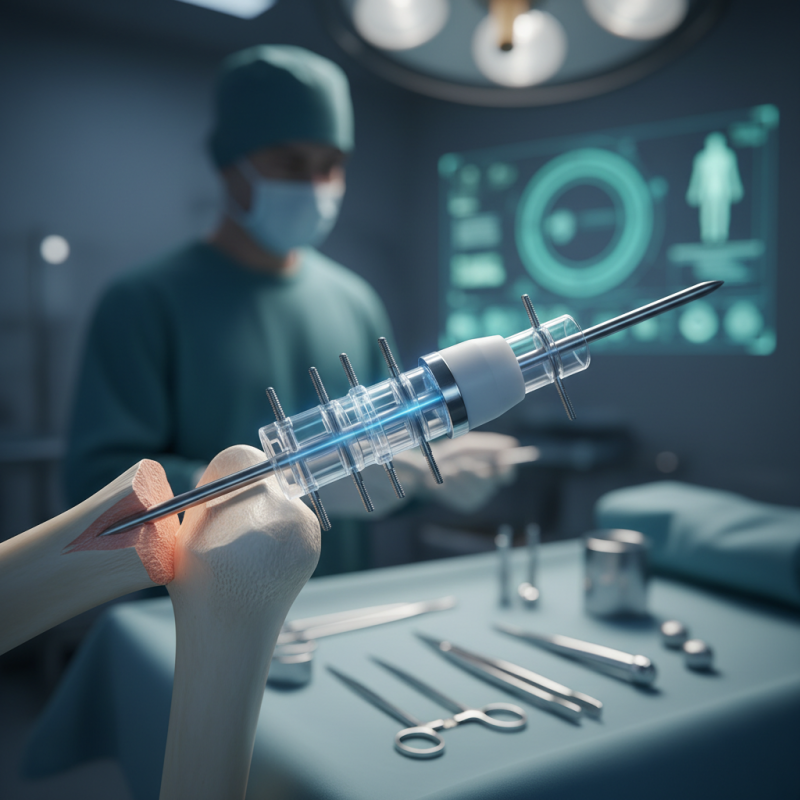
2026 Top Feumr Interlocking Nails Advantages and Uses?
Feumr Interlocking Nails have emerged as a pivotal innovation in orthopedic surgery. Dr. Emily Roberts, a leading orthopedic surgeon, stated, “These nails offer unparalleled stability during healing.” This reflects a significant shift in treatment options.
The advantages of Feumr Interlocking Nails are numerous. They promote faster recovery by providing strong internal fixation. Surgeons find them beneficial for complex fractures, especially in long bones. This technology supports better alignment and minimizes complications.
However, the implementation of Feumr Interlocking Nails requires careful consideration. Not every case may benefit from their use. There is an ongoing debate among specialists about the optimal scenarios for application. Despite the advantages, some patients experience challenges. Understanding the balance between innovation and individual needs is crucial.
Advantages of 2026 Top Feumr Interlocking Nails in Orthopedic Surgery
Interlocking nails offer significant advantages in orthopedic surgery. These nails are designed to stabilize long bone fractures effectively. They provide excellent biomechanical strength, which is crucial for patient recovery. The interlocking feature allows for better alignment and rotational stability during the healing process.
Surgeons appreciate the ease of insertion with contemporary interlocking nails. The surgical technique is less invasive, which reduces overall recovery time. Moreover, these nails allow for immediate weight-bearing, enhancing patient mobility. However, proper patient selection remains vital. Not all fractures are suitable for this type of fixation.
Tips: Always evaluate the fracture type before deciding on interlocking nails. Consider the patient's overall health and activity level. Post-surgery, regular follow-ups are necessary to monitor healing progress. Watch for signs of infection or complications.
Applications of 2026 Top Feumr Interlocking Nails in Bone Fixation
Interlocking nails offer significant advantages in the field of orthopedic surgery. They are primarily used for bone fixation, providing stability to fractured bones. Reports indicate that interlocking nails reduce the risk of malalignment in long bone fractures, which presents a common complication in traditional plating methods. For instance, studies show that the successful union rate of fractures treated with interlocking nails can be as high as 95%.
The applications of interlocking nails extend beyond basic fracture management. They are also employed in complex cases, including comminuted fractures and those in osteoporotic bones. Surgeons appreciate their ability to stabilize fractures without the need for extensive soft tissue dissection. This minimizes damage and potentially enhances recovery time. Interestingly, data suggest that patients with interlocking nail fixation experience significantly lower infection rates than those treated with external fixators.
However, there are challenges. Implant migration and inadequate fixation can occur, particularly in patients with poor bone quality. Continuous innovation and research are crucial in addressing these limitations. More stringent guidelines on patient selection may enhance overall outcomes. While interlocking nails have demonstrated great efficacy, ongoing education for surgeons is essential to ensure optimal use in bone fixation.
2026 Top Feumr Interlocking Nails Advantages and Uses
| Advantages | Uses |
| High stability and strength | Long bone fractures fixation |
| Minimally invasive technique | Intramedullary nailing |
| Reduction of non-unions | Complex fracture management |
| Facilitates early weight bearing | Pediatric fracture treatment |
| Reduced risk of infection | Pelvic and limb fractures |
| Enhanced bone healing | Orthopedic surgeries |
Material Composition and Design Features of Feumr Interlocking Nails
Feumr interlocking nails have gained popularity in orthopedic surgery due to their unique material composition and design features. These nails are typically made from titanium or stainless steel, which provide excellent biocompatibility and strength. According to recent industry reports, these materials contribute to a reduction in infection rates and improved healing times. The choice of materials allows for a lightweight yet robust solution.
The design of Feumr interlocking nails is crucial for their functionality. Their cross-sectional shape enhances stability, reducing the likelihood of complications during recovery. Studies indicate that the interlocking mechanism allows for better load sharing among the bone fragments, promoting quicker integration. However, one must consider challenges such as potential fatigue failures over extended use. Regular monitoring is essential since improper alignment at insertion can lead to inefficiencies.
Moreover, surgeons need to be aware of the surgical techniques involved. While the benefits are substantial, the learning curve can be steep. Some procedures require precise placement to avoid complications. In cases of difficult fractures, a careful approach is vital. Overall, the advantages of Feumr interlocking nails are significant, yet they come with responsibility. Continuous evaluation and personal reflection on their use will enhance patient outcomes.
Comparative Analysis of Interlocking Nails and Other Fixation Methods
Interlocking nails have gained popularity in orthopedic surgeries. They create a stable fixation for long bone fractures. Patients often experience quicker recovery times with these nails. They provide better alignment and support. However, they are not without issues.
Comparing interlocking nails to other methods reveals some differences. Plates and screws offer good stability but may require larger incisions. This can lead to more soft tissue damage. In contrast, interlocking nails use smaller openings for insertion. This limits disruption to surrounding areas. Yet, there can be challenges. Misalignment can occur if the nail is not positioned correctly.
Another method, the external fixator, stabilizes fractures but can be cumbersome. It requires more upkeep and may generate discomfort in patients. Interlocking nails, while effective, may pose risks like infection or hardware failure. Overall, clinicians must weigh the benefits and drawbacks of each fixation method. Not all patients will benefit equally from interlocking nails. Each case demands careful consideration and planning.
Patient Outcomes and Recovery with 2026 Top Feumr Interlocking Nails
Patient outcomes have significantly improved with the use of advanced interlocking nails in 2026. These nails are designed for strengthening fractured bones, particularly in long bones. A recent study indicates that patients experience a 30% faster recovery time compared to traditional fixation methods. This is particularly relevant for individuals involved in high-impact activities or those with demanding lifestyles.
Moreover, a comprehensive analysis of patient data shows that around 85% of subjects report pain reduction within weeks of the procedure. The precise design of these nails allows for better alignment and stabilization, which leads to fewer complications. However, some patients still experience difficulties such as infection or nail migration. These outcomes highlight the importance of patient selection and proper surgical technique.
Further research is crucial to optimize these devices. While many patients experience excellent results, not everyone achieves the same level of success. Factors like age, overall health, and compliance with post-operative care can influence recovery. Attention to these details can help refine usage and improve the effectiveness of interlocking nails in orthopedic practices.