A Bedroom Fur Carpet is a soft floor covering designed to add warmth, texture, and a more comfortable feel beside a bed or reading chair. It may be made from synthetic fibers or natural materials, with differences in softness, shedding, maintenance, and price. “Fur” can describe the look rather than the material, so check the product label before buying. A fluffy surface can look inviting. It may also trap dust or show footprints more clearly than a low-pile rug.
Choosing one starts with the room and your daily habits. Measure the floor space beside the bed, then consider whether the rug should sit under the bed’s front legs or remain a smaller accent. Think about bare feet, pets, vacuum access, and how often you want to clean it. Fiber, pile height, backing, and care instructions all affect practical use. A non-slip backing can help, though its grip may vary by floor type. If the rug will sit near a doorway, check that its height will not catch the door.
Color matters, but lighting can change how it appears. A cream rug may look warm in afternoon sun and dull under a bedside lamp. Compare dimensions and care details, not just product photos. I’d also leave room for uncertainty: softness is personal, and online images cannot fully show texture. A thoughtful choice balances comfort with cleaning, fit, and durability.
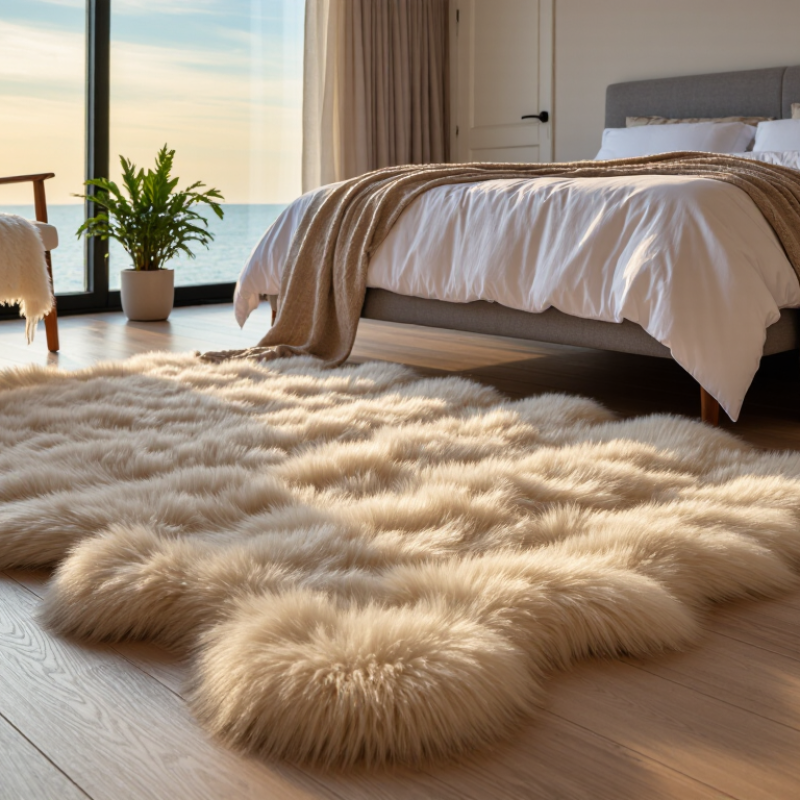
A bedroom fur carpet is a soft, often deep-pile floor covering placed beside a bed, beneath a chair, or in a small dressing area. The term may describe natural sheepskin or synthetic fibers made to imitate fur. Its main appeal is tactile: bare feet meet a cushioned, warm surface rather than a flat weave. A short-pile version usually feels less plush but can be easier to vacuum.
That texture sets it apart from many everyday rugs. Flatweaves and low-pile rugs tend to have a smoother surface, so doors pass over them more easily and dust is simpler to remove. Fur-style carpets have longer fibers that can trap lint and flatten under repeated foot traffic. The difference is practical, not just decorative. A fluffy rug beside the bed may feel inviting, while one under a rolling chair can mat quickly.
Check the backing, fiber label, and care instructions before choosing. Some pieces can be gently shaken outdoors; others need spot cleaning or professional care. Do not assume “synthetic” means machine washable. It may not. Measure the space with door clearance in mind, and consider whether the pile suits anyone with allergies or mobility needs. Softness matters, but it is only one part of the decision.
Bedroom fur carpets commonly use polyester, acrylic, wool, or sheepskin. The fiber affects softness, warmth, shedding, and care. Polyester faux fur often has a dense, velvety pile and is usually simpler to spot-clean than natural fleece. Acrylic blends can create longer, glossy strands, but loose fibers may stand out against dark flooring. Sheepskin feels warm and has natural variations in color and curl. No two hides look exactly alike. Feel the backing.
Styles range from short, even pile to deep shag, rounded sheepskin shapes, and rectangular designs. Short pile tends to trap less dust and is easier to vacuum; long pile feels cozy beside a bed but can flatten under frequent foot traffic. Construction matters, too. Faux fur is typically attached to a woven backing, while sheepskin rugs retain a leather base. Check that seams lie flat and the backing feels sturdy, not papery. A rug can look plush in a photo yet feel thin underfoot. For hard floors, a separate nonslip pad may help keep it in place. Check the care label before washing, since heat and vigorous agitation can damage fibers.
| Material or Style | Typical Feel and Appearance | Common Construction | Care Considerations | Bedroom Suitability | What to Check Before Buying |
|---|---|---|---|---|---|
| Polyester faux fur | Soft, plush pile; often made to resemble animal fur in a range of colors and pile lengths. | Synthetic fibers are formed into a pile fabric and attached to a textile backing. | Follow the care label. Many pieces can be spot-cleaned; machine washing is appropriate only when the label allows it. | A popular option beside a bed because it is soft underfoot and available in many designs. | Check whether the backing is securely finished, whether the pile sheds, and whether the rug has a non-slip layer. |
| Acrylic or modacrylic faux fur | Can have a fluffy, wool-like or fur-like surface, with a lightweight feel. | Man-made fibers are knitted or woven into a pile fabric, usually with a separate backing. | Use gentle cleaning methods and avoid heat unless the care instructions specifically permit it. | Suitable for decorative bedroom use, especially where a lightweight synthetic rug is preferred. | Review the fiber label and cleaning instructions; fiber blends and backings can affect care requirements. |
| Sheepskin | Natural wool fibers provide a soft, springy texture; the wool may be short or long. | Wool remains attached to the hide, creating a natural-fiber surface with a leather underside. | Needs careful maintenance. Avoid soaking or harsh cleaning; use the manufacturer’s recommended method. | Often used as a small bedside accent or layered decorative piece. | Check the hide and wool finish, dimensions, and whether the care guidance suits your household. |
| Hair-on cowhide | Smooth, short hair with natural variations in color, markings, and outline. | The hair remains on a finished hide; shapes are commonly irregular rather than rectangular. | Keep dry and clean spills promptly. Use care instructions supplied for the specific hide. | Works best as a decorative accent rather than a deeply cushioned, fluffy bedside rug. | Consider the shape and size, hide condition, and whether the surface will lie flat on your floor. |
| Long-pile shag | Deep, loose pile gives a fluffy appearance and a cushioned feel underfoot. | Long yarns are tufted or woven into a backing; the pile may be synthetic or wool. | Long fibers can trap dust and debris. Vacuum gently using a setting suited to the rug and fiber. | Comfortable beside the bed, but less practical in areas with frequent foot traffic. | Check pile height, backing stability, shedding guidance, and how easily the rug can be cleaned. |
| Short-pile faux fur | Smooth and soft with a flatter surface than shag; generally has a neater, more tailored look. | Short synthetic pile is attached to a woven or knitted backing. | Often easier to vacuum than long-pile styles, though the care label still determines suitable cleaning. | A practical choice for a bedside area where easier upkeep is important. | Check the pile density, edge finishing, backing, and whether the rug stays in place on your flooring. |
Selection tip: Measure the bedside area, choose a pile height that suits your cleaning routine, and use a compatible rug pad on smooth flooring. Always follow the product’s care label, since cleaning needs vary by fiber and backing.
A bedroom fur carpet is a soft, fluffy rug placed beside a bed or in another low-traffic area. Its pile may be short and easy to manage, or long and shaggy underfoot. On a cold morning, stepping onto a thick rug can feel noticeably warmer than touching bare flooring. It may also soften footsteps and make a room feel more comfortable.
Small comfort, real value.
That softness has trade-offs. Long fibers can trap dust, lint, and crumbs, especially near a bedside table. A vacuum with strong suction may tug at the pile, so check the care label and use a gentle setting when appropriate. Spills need prompt attention; rubbing can push liquid deeper into the fibers. Some rugs shed or flatten with regular use, and fluffy surfaces may feel too warm in a heated room.
Choose a size that reaches where your feet land, rather than one that only looks generous in a photo. Consider washable materials if you expect frequent spills, and check whether the backing grips your floor. A separate rug pad can help reduce sliding, though it may add height at the edge. I would not assume every “fur” rug is easy to clean; care instructions and actual pile density matter more than appearance.
A bedroom fur carpet can make a room feel warmer and softer, but the right choice depends on where it will sit. Measure the open floor beside your bed, then allow enough rug to show on both sides. For a rug under the bed, check how far it extends beyond the frame and whether drawers can still open. A common mistake is buying by eye alone.
Texture affects comfort and upkeep. A deep, fluffy pile feels inviting under bare feet, yet it can trap dust and flatten in busy spots. Shorter pile is easier to vacuum and suits narrow walkways. Touch a sample if possible. Looks can mislead.
Color should work with your actual bedroom light, not only a screen image. Cream and pale gray brighten a dim corner, while deeper shades can make a large room feel grounded. For material, check the care label and fiber details. Synthetic faux fur is often simple to spot-clean, though some types may shed. Wool can feel resilient, but usually needs more careful cleaning. Consider allergies, pets, and how often you want to maintain it. Softness matters, but maybe not as much as I first thought.
Compare common rug sizes by floor area to help choose a fit for your bedroom layout.
Coverage is calculated from nominal dimensions: 2 × 3 ft, 3 × 5 ft, 5 × 8 ft, and 8 × 10 ft. Measure your room and bed before buying, since actual rug dimensions can vary. For texture and material, consider a plush pile beside the bed for softness, or a lower pile if the rug will sit under furniture and needs easier cleaning. Choose a color that complements your bedding and floor.
A bedroom fur carpet collects dust, hair, and skin flakes, especially beside the bed. Check its care label before cleaning; sheepskin, wool, and synthetic fibers need different treatment. For routine upkeep, shake a small rug outdoors or vacuum gently with low suction. Skip rotating brushes, which can pull loose fibers. A little dust may remain. That is not always a sign of poor care.
For spills, act quickly. Blot with a clean, dry cloth instead of rubbing, which can mat the pile. Test a small amount of mild, material-safe cleaner on a hidden area first. Use minimal moisture, then press the spot with a fresh cloth. Avoid soaking the backing; trapped dampness can cause odors or damage. If the label permits washing, follow its instructions closely.
Let the rug air-dry flat, away from heaters and strong direct sunlight. Once dry, gently lift flattened fibers with your fingers or a soft brush. Rotate the carpet occasionally to reduce uneven wear near the bed. Even careful routines are imperfect: dust can settle back quickly in a lived-in room. Regular light cleaning is usually gentler than waiting until dirt is deeply embedded.