Choosing a Bedside Runner Carpet involves more than matching colors with a bedroom scheme. Global buyers must consider comfort, safety, cleaning, climate, and shipping conditions. A runner beside the bed should feel soft at dawn, remain stable on smooth flooring, and resist damage from daily footsteps.
Interior designer Albert Hadley offered a useful standard: “The essence of interior design will always be about the people and how they live.” His words matter here. A bedside runner is touched before breakfast, after travel, and during quiet nighttime routines. Its design must serve real habits, not only photographs.
This guide examines ten practical types of Bedside Runner Carpet for international buyers. It compares wool, cotton, polyester, polypropylene, chenille, shag, flatweave, washable, jute-blend, and memory-foam options. Each type creates a different underfoot experience. Each also brings limitations.
Wool feels warm and resilient, but it may cost more. Cotton feels light and familiar, yet it can flatten quickly. Synthetic fibers often simplify cleaning, although some feel less natural. Shag styles look inviting, but their deep pile may trap dust. Flatweaves travel easily, though they offer less cushioning.
Details matter. Check the backing, edge binding, pile height, odor, and care label. Measure the walking space beside the bed, not merely the mattress length. Some listings appear generous until the runner arrives. That mistake is common.
No single runner suits every bedroom. Room temperature, floor material, pets, children, and washing access can change the best choice. A careful buyer may still revise expectations after real use. That is not failure. It is useful evidence.
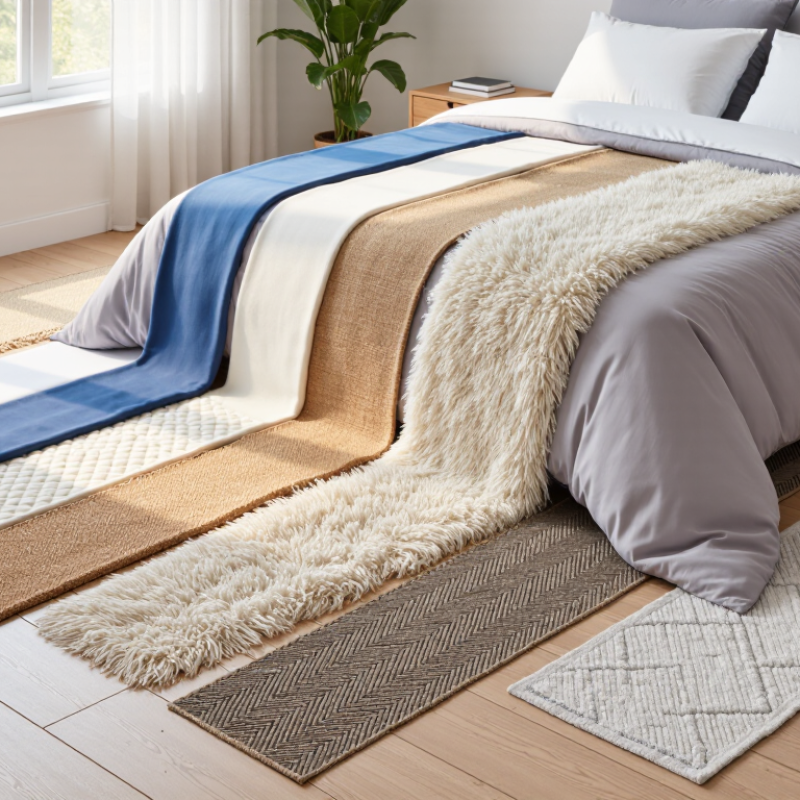
A bedside runner carpet is a narrow floor covering placed beside a bed. It gives bare feet a warmer, quieter landing in bedrooms, guest rooms, and hotel suites. Its main job is practical, not merely decorative. The ten commonly specified forms include wool, cotton, jute, sisal, microfiber, polyester, polypropylene, recycled PET, shag, and flatweave runners. Each type changes the feel underfoot, cleaning routine, and expected service life. Low-pile runners suit doors that open inward. Thicker piles feel softer, but they may catch dust and slow drying.
In humid markets, I prefer quick-drying fibers and a firm backing. In colder regions, dense wool can provide noticeable insulation beside the bed. For children’s rooms or rental properties, washable construction can reduce maintenance pressure. A non-slip backing helps, but it does not replace a level floor or careful installation. Buyers should check actual dimensions, edge binding, colorfastness, pile height, and cleaning instructions. Ask for test documents when safety or indoor-air requirements matter. Specifications can vary between production batches.
I have seen a beautiful runner fail because its corners curled after washing. That detail is easy to miss. Sample testing is wiser than relying on photographs. Measure bedside clearance, leave space around furniture, and inspect the underside before shipment. A runner should remain stable during ordinary steps, including early-morning movement in low light. Some buyers focus too heavily on appearance; I have made that mistake myself. A practical carpet must balance comfort, cleaning, climate, and long-term floor safety.
Bedside runners need softness, grip, and easy maintenance. Grand View Research reported that the global carpets and rugs market reached about USD 72 billion in 2023. This scale reflects stronger demand for practical residential textiles, not decoration alone. In purchasing projects, I usually compare these ten core types:
Wool offers warmth and natural resilience, but it costs more and needs careful cleaning. Nylon handles frequent walking well. Polyester provides color variety and stain resistance. Polypropylene suits humid rooms and tighter budgets. Cotton feels light and washable, although it can flatten quickly. Viscose looks refined under soft lighting, yet moisture may mark its surface. Bamboo fiber feels smooth, but durability varies between constructions. Tufted runners offer flexible patterns and moderate pricing. Woven runners usually provide stronger structure. Hand-knotted runners create a premium appearance, though production consistency requires inspection.
The Freedonia Group has linked residential flooring demand with renovation activity and replacement cycles. That matters for global buyers choosing runner specifications. Check pile height, edge binding, backing grip, and cleaning instructions.
A 2024 textile sustainability report from Textile Exchange also emphasizes recycled inputs and traceable material claims. Ask for test evidence, not attractive wording. I would avoid slippery backing beside polished floors. Even a beautiful runner can become a daily nuisance.
No type fits every bedroom. Thresholds, humidity, pets, and cleaning habits still change the decision.
Top 10 Types of Bedside Runner Carpet for Global Buyers
Bedside runners differ greatly in fiber performance. Wool feels warm and resilient, but it can cost more and require careful moisture control. Nylon handles frequent foot traffic and recovers well after compression. Polypropylene resists stains and suits budget-focused projects, although its texture may feel less refined. Recycled polyester offers soft color options, but buyers should verify fiber content and testing documents. Always request a physical sample. Product photographs can hide pile height and shade differences.
Backing affects safety, stability, and maintenance. Latex-backed runners usually grip smooth floors effectively, while PVC backing can offer stronger moisture resistance. However, some backings may curl when exposed to heat or uneven flooring. Sizes should match the bedside area without blocking drawers or doors. Common lengths range from 1.5 to 2.5 meters, but custom dimensions reduce awkward gaps. Surface texture matters, too. Low-cut pile feels smooth under bare feet, loop pile hides marks, and ribbed textures create stronger visual direction. Thick pile looks inviting, yet it may catch wheels or collect dust.
Tips: Measure the floor twice, including clearance around furniture. Test samples under warm and cool lighting. Check edge binding, backing grip, pile recovery, and cleaning instructions. A minor color mismatch can affect an entire room. I have found that buyers sometimes prioritize softness and overlook sliding risks. That decision deserves a second look. Reliable suppliers should provide composition details, size tolerances, care guidance, and relevant safety test results.
| No. | Bedside Runner Type | Primary Fiber | Construction | Typical Backing | Common Runner Sizes | Surface Texture | Typical Pile Height | Key Performance Characteristics | Best-Fit Applications |
|---|---|---|---|---|---|---|---|---|---|
| 1 | Wool Cut-Pile Runner | Wool | Tufted or woven | Cotton, jute, or latex-coated backing | 60–80 × 180–300 cm (24–31 × 71–118 in) |
Soft, dense, even cut pile | 8–15 mm | Warm hand feel, naturally resilient, good insulation, and moderate soil concealment | Premium bedrooms, hospitality rooms, and cooler climates |
| 2 | Polypropylene Loop-Pile Runner | Polypropylene | Machine-tufted loop pile | Action backing or latex backing | 60–80 × 180–300 cm (24–31 × 71–118 in) |
Low, compact loops | 4–8 mm | Low moisture absorption, colorfastness, and practical stain resistance | High-turnover accommodation and budget-conscious bedrooms |
| 3 | Polyester Shag Runner | Polyester | Tufted cut pile | Latex or non-woven fabric backing | 60–80 × 180–300 cm (24–31 × 71–118 in) |
Long, fluffy, high-low appearance | 20–35 mm | Soft underfoot, visually full, and available in many colors; may retain compression marks | Decorative residential bedrooms and low-traffic guest rooms |
| 4 | Nylon Saxony Runner | Nylon | Tufted cut pile | Action backing with latex adhesive | 60–80 × 180–300 cm (24–31 × 71–118 in) |
Dense, smooth, slightly lustrous pile | 8–15 mm | High abrasion resistance, strong fiber recovery, and suitable for frequent foot traffic | Busy homes, serviced apartments, and commercial bedrooms |
| 5 | Viscose Low-Pile Runner | Viscose or rayon | Woven or tufted cut pile | Cotton or latex-coated backing | 60–80 × 180–300 cm (24–31 × 71–118 in) |
Silky, flat, reflective surface | 3–8 mm | Elegant sheen and soft touch; sensitive to moisture and heavy abrasion | Low-traffic decorative bedrooms and dry indoor environments |
| 6 | Cotton Flatweave Runner | Cotton | Plain, patterned, or braided flatweave | Woven cotton or light latex backing | 60–80 × 180–300 cm (24–31 × 71–118 in) |
Flat, breathable, and lightly textured | 2–5 mm | Lightweight, easy to handle, and generally washable when care instructions permit | Warm climates, casual interiors, and rooms requiring easy rotation |
| 7 | Jute Flatweave Runner | Jute | Braided or woven flatweave | Natural textile backing or latex backing | 60–80 × 180–300 cm (24–31 × 71–118 in) |
Coarse, natural, pronounced grain | 5–10 mm | Firm texture, natural appearance, and good dry-area performance; vulnerable to prolonged moisture | Bohemian, coastal, rustic, and naturally styled bedrooms |
| 8 | Recycled PET Flatweave Runner | Recycled polyester (PET) | Woven or needle-punched | Polyester fabric or rubberized backing | 60–80 × 180–300 cm (24–31 × 71–118 in) |
Flat, woven, and slightly crisp | 3–7 mm | Low moisture absorption, durable coloration, and often suitable for easy-care designs | Sustainability-focused projects and frequently refreshed interiors |
| 9 | Microfiber Plush Runner | Fine-denier polyester | Tufted or woven plush pile | TPR, latex, or non-slip dot backing | 50–70 × 150–240 cm (20–28 × 59–94 in) |
Velvety, smooth, and cushion-like | 10–20 mm | Soft underfoot, quick-drying compared with absorbent natural fibers, and commonly made with anti-slip backing | Residential bedrooms, children's rooms, and comfort-oriented interiors |
| 10 | Needle-Punched Olefin Runner | Olefin or polypropylene | Needle-punched bonded fiber | PVC, TPR, or rubberized backing | 60–90 × 180–300 cm (24–35 × 71–118 in) |
Dense, short, felt-like surface | 3–6 mm | Thin profile, easy door clearance, low water absorption, and practical everyday durability | Dormitories, rental housing, corridors, and compact bedrooms |
Note: Dimensions and pile heights are common market ranges rather than fixed standards. Actual specifications vary by construction method, supplier, backing system, and intended installation.
Top 10 Types of Bedside Runner Carpet for Global Buyers
A bedside runner must resist slips, rolling edges, and nightly foot traffic. Low-pile nylon offers strong abrasion resistance and quick vacuuming. Polypropylene handles stains well and suits tighter budgets. Wool feels warm and recovers from compression, but it needs gentler care. Cotton runners are comfortable, though they may hold moisture near humid bedsides. Rubber-backed runners can improve grip on smooth floors. Check that the backing does not mark wood or soften under heat.
Other useful options include woven vinyl, flat-weave polyester, sisal, recycled-fiber blends, and washable microfiber. Flat weaves usually trap less dust than deep piles. Woven vinyl tolerates spills, but its surface can feel cold. Sisal gives firm texture, yet moisture may cause swelling. Washable microfiber is convenient for care, although repeated washing can weaken seams. No material wins every test.
Regional requirements deserve careful review. Buyers in damp climates should inspect mold resistance, drying time, and backing ventilation. In colder regions, thermal comfort matters more than minimal thickness. Healthcare and hospitality projects may require tested slip resistance, low emissions, or fire performance. Standards differ by destination, so request current test documents from the supplier. Measure the runner beside the bed, leaving enough clearance for doors and mobility aids. Small details matter. I have seen attractive runners fail because corners curled after cleaning. A slightly heavier construction may be safer, but it can create a trip hazard if the edge is poorly finished. Vacuuming, prompt spot cleaning, and periodic backing checks remain essential.
Comparative suitability ratings from 1 to 5, based on typical material characteristics related to underfoot safety, expected durability, cleaning and maintenance, and adaptability to regional climate and building requirements.
Higher scores indicate stronger general suitability. Actual performance depends on pile construction, backing, installation, moisture exposure, local fire regulations, and certified slip-resistance testing.
Selecting a bedside runner carpet requires more than matching colors. Buyers should compare flat-woven, tufted, hand-knotted, shag, braided, chenille, wool, cotton, bamboo, and recycled-fiber options. Each type offers different comfort, durability, cleaning needs, and production costs. Low-pile runners suit hotels because luggage wheels move across them easily. Shag designs feel warmer, but they can trap dust near beds.
Measure the available floor space before requesting quotations. A runner should frame the bed without blocking drawers or doorways. Confirm dimensions in both centimeters and inches. Ask for samples, backing details, pile height, edge stitching, and colorfastness results.
Slip resistance matters on polished floors. Moisture-resistant fibers are useful in humid regions, while wool may perform better in cooler rooms.
Global purchasing also requires careful supplier communication. Request packaging measurements, carton weight, minimum order quantities, lead times, and inspection procedures. Verify care labels and destination-market requirements before shipment. Photos can hide uneven edges or slight shade changes. Samples help, but they are not perfect. Batch color may vary. I would allow a small tolerance and record it in the purchase agreement. One overlooked detail can increase installation labor and replacement costs. Short delivery promises can also be misleading without written production schedules.