How to Choose the Best Carpet for Your Office Space?
Choosing the right carpet for your office space is crucial. A well-selected carpet can enhance comfort and productivity. According to a recent industry study, 75% of employees report feeling more motivated in spaces with quality flooring. The right Carpet Office can also reduce noise levels. Carpets possess sound-absorbing properties that contribute to a more focused work environment.
Moreover, the carpet you choose affects your brand's image. Clients form impressions based on your office's aesthetics. Interestingly, over 60% of businesses overlook the impact of flooring on their overall design. Selecting an appealing carpet can deliver a positive first impression. However, navigating this decision can be overwhelming. Consider the durability, maintenance needs, and style to ensure the carpet lasts.
Remember, not every carpet fits every office. Reflect on your specific needs and environment. Analyze factors like foot traffic and color schemes. The ideal choice may require trial and error. Embrace the process to find the perfect Carpet Office for your space. Each decision should reflect your office culture and values.

Factors to Consider When Selecting Office Carpet Types
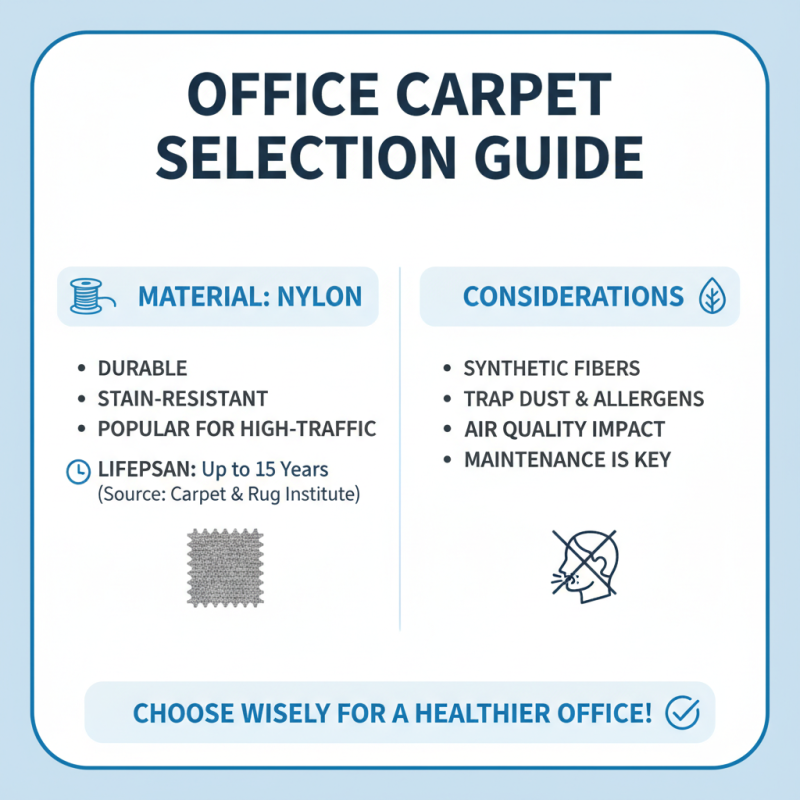
When selecting carpet types for your office, several key factors come into play. The choice of material is crucial. Nylon carpets are durable and stain-resistant, making them a popular option. A study by the Carpet and Rug Institute shows that commercial nylon carpet can last up to 15 years in high-traffic areas. However, synthetic fibers can trap dust and allergens, which may affect office air quality.
Color and pattern selection also impact the workplace ambiance. Lighter colors can create a spacious feel, while darker shades offer a cozy, professional look. According to a report from the International Facility Management Association, color psychology suggests that blue hues can enhance productivity. Nevertheless, overly bold patterns might distract employees and lead to visual fatigue over time.
Investigating maintenance requirements is essential. Some carpets require frequent cleaning and treatment. This can mean higher long-term costs, which are easy to overlook. Moisture and spills may lead to mold growth if not addressed promptly. The National Association of Flooring Professionals indicates that regular upkeep extends carpet life but can be burdensome. Weigh these factors carefully during your selection process.
Understanding Different Carpet Materials and Their Benefits
Choosing the right carpet for your office can significantly impact aesthetics and functionality. Various materials offer distinct benefits.
Wool, for instance, is durable and naturally stain-resistant. It provides excellent insulation, keeping the office warm in winter. However, it can be pricey and requires professional cleaning.
Nylon is another popular choice. It’s strong and resilient, making it ideal for high-traffic areas. It’s easy to clean and comes in many colors and patterns. On the downside, nylon might not be as eco-friendly as other options, raising concerns for environmentally-conscious businesses.
Lastly, consider
synthetic fibers like polypropylene. This material is budget-friendly and moisture-resistant. It’s excellent for areas prone to spills. Still, it may wear out faster than wool or nylon, leading to potential regrets.
Balancing
cost, durability, and aesthetics is crucial for your decision. Reflect on your specific needs and the environment of your office space.
Evaluating Carpet Styles and Designs for Professional Environments
Choosing the right carpet for your office
can significantly impact the work environment. Many factors come into play when evaluating carpet styles and designs. For instance, consider the overall aesthetic of your office. A vibrant pattern may energize a creative space, while a more subdued design could enhance professionalism in a corporate setting.
Flooring materials
come in various textures and colors. A plush carpet can provide comfort, yet it may show wear and require frequent cleaning. On the other hand, low-pile carpets tend to withstand heavy foot traffic better. Think about maintenance as well. Darker colors may hide stains, but they can also make a space feel smaller.
Consider how the carpet will fit into your office culture.
Does it promote collaboration or quiet focus? Each choice carries its weight, and sometimes you might feel stuck. It’s vital to reflect on what best aligns with your brand values. Choosing a carpet is not just about appearance—it's about creating a space that inspires productivity.
Assessing Durability and Maintenance Requirements for Office Carpets
Choosing the right carpet for your office goes beyond color and style.
Durability is crucial. Offices experience high foot traffic,
and carpets need to withstand wear and tear. Look for options with strong fibers.
Nylon and polyester
are popular choices. They resist stains and fading better than others.
Maintenance is another key consideration. A carpet that requires frequent deep cleaning can become a chore.
Regular vacuuming is essential, but some materials trap dust and allergens.
Consider how much time your team will spend cleaning versus working.
A low-maintenance carpet can save time and energy.
Think about what works for your space. Light-colored carpets can brighten a room but may show dirt quickly.
Darker shades hide stains but may get too warm. Balance aesthetics with practicality to create a
welcoming environment.
Reflect on your office's specific needs and the life cycle
of the carpet chosen.
Budgeting for Office Carpet Installation and Long-Term Care Costs
When budgeting for office carpet installation, consider the initial cost, but don’t stop there. The type of carpet you choose affects long-term expenses. High-quality carpets may cost more upfront, but they often last longer. You need to think about how much foot traffic your office has. A heavily used area requires durable materials. You might be tempted to save money now, but it can lead to more costs later.
In addition to installation, ongoing maintenance is crucial. Regular cleaning can extend your carpet's life. Hiring professionals might seem expensive, yet it often saves money in the long run. Think about the equipment needed for upkeep, such as vacuums for daily cleaning. Remember, neglecting care could result in early wear, leading to a premature replacement.
You may also want to set aside a reserve fund for unexpected repairs. Accidental spills or stains can happen. Not all carpets handle these easily. Sometimes, you will face difficult choices about repairs versus replacement. The right budget today can prevent larger headaches later down the line.