Leave Your Message

Top 10 Geometric Rug Styles for Global Buyers?

Choosing the right Geometric Rug involves more than matching colors to a room. Global buyers must consider design, construction, origin, sizing, and long-term performance. A sharp diamond pattern may suit a modern hotel, while softer lines can warm a residential lounge. However, visual appeal alone can mislead. Screen colors vary. Lighting changes everything.

This guide explores ten Geometric Rug styles that attract buyers across different markets and interior settings. It considers flatweave, hand-tufted, hand-knotted, washable, vintage-inspired, and outdoor-ready designs. Each style offers different advantages in texture, durability, cost, and maintenance. Experienced buyers should request detailed specifications, including fiber content, pile height, backing, edge finishing, and care instructions. Supplier photographs are useful, but physical samples remain more dependable.

Small details matter.

A rug’s pattern scale can change the perceived size of a room. Dense geometric lines may feel energetic, yet they can overwhelm compact spaces. Neutral tones often travel well across markets, but local preferences still influence purchasing decisions. Buyers should also verify production capabilities, packaging standards, delivery terms, and quality-control procedures. Certifications may support responsible sourcing, but their scope should be checked carefully rather than assumed.

No style fits every project. Some recommendations may seem obvious, while others deserve debate. Even experienced professionals can underestimate how texture, lighting, and furniture placement affect the final result. Use these ten styles as practical reference points, not fixed rules. The best choice balances visual character with reliable performance, clear documentation, and the expectations of its intended market.

Top 10 Geometric Rug Styles for Global Buyers?

Geometric Rug Styles: Core Shapes, Patterns, and Visual Features

Geometric rugs speak through shape, repetition, and visual balance. The ten most useful styles include chevrons, stripes, diamonds, triangles, hexagons, circles, grids, trellis patterns, checkerboards, and irregular polygons. Each creates a different rhythm underfoot. Chevron lines suggest movement, while diamonds add a sharper, more structured feeling. Circles soften rooms with many straight edges.

Scale changes the entire impression.
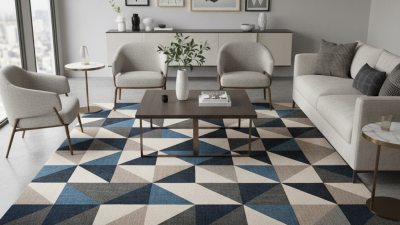
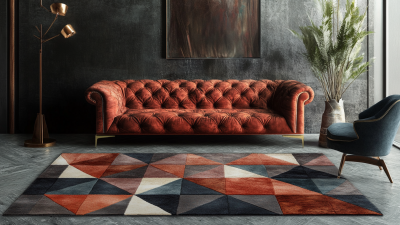
Large diamonds can anchor an open living area, but small grids may look busy in compact spaces. High-contrast black and ivory patterns feel graphic and modern. Muted terracotta, sand, and blue create a quieter surface. I usually inspect the pattern from several meters away, because details can disappear when viewed closely. That simple test often reveals unexpected weaknesses.

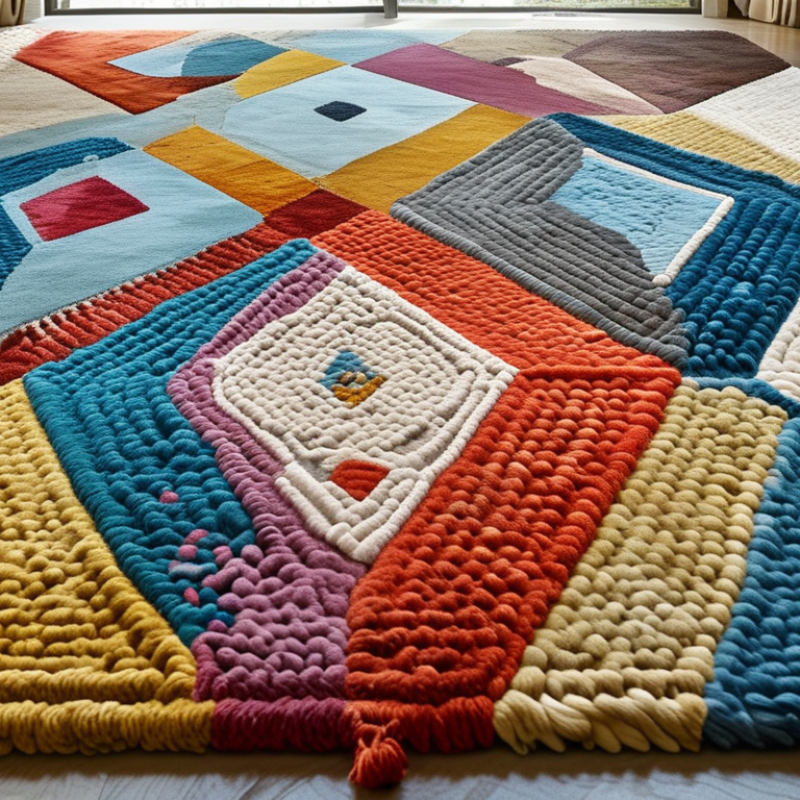
Material also affects the visual result. Flatwoven rugs keep lines crisp, while thicker piles make edges appear softer and less exact. Hand-finished pieces may show slight variations. That is not always a flaw. It can add depth, although uneven spacing may disappoint buyers seeking strict symmetry. I once underestimated how strongly a dark border changed a room’s proportions. Now I check the border, motif scale, and furniture placement together. Practical buyers should request clear images, precise dimensions, and cleaning guidance before choosing a geometric design.

Modern Minimalist Rugs for Contemporary Global Interiors

Modern minimalist rugs bring structure without making contemporary rooms feel cold. For global buyers, the strongest geometric choices balance clear design with everyday comfort. The ten most adaptable styles include fine grids, monochrome blocks, arch lines, broken stripes, soft diamonds, circles, asymmetrical planes, narrow borders, terrazzo-like flecks, and tonal waves.

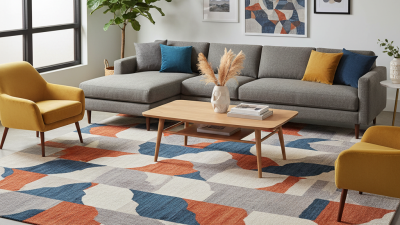
Choose a flat geometric pattern for dining areas and home offices. Its low profile allows chairs to move easily and reduces trapped dust. In living rooms, a short-pile rug with layered squares can define seating without overwhelming pale wood or concrete floors. Neutral shades travel well across interiors, but muted terracotta, olive, or deep blue can add useful warmth. A perfectly balanced rug may look strangely lifeless. Small irregularities sometimes create more character.

Tips: Measure the seating zone, not only the floor. Keep at least two furniture legs on the rug. Test the pattern beside natural light, because beige can appear grey indoors. Check fiber density, edge finishing, and cleaning instructions before ordering. I prefer samples when possible, although screens still distort color. For smaller rooms, use open lines and limited contrast. For large rooms, broader shapes create visual weight without extra decoration. Consider local climate, walking habits, and maintenance time before choosing a final style.

Top 10 Geometric Rug Styles for Global Buyers

Typical geometric motif repeat scale for contemporary residential interiors

Larger repeat scales create a stronger visual statement in open-plan rooms, while smaller patterns are easier to layer and coordinate in compact spaces. The measurements are practical reference values; actual rug designs vary by collection, room size, and weaving technique.

Traditional Geometric Rugs Inspired by Regional Design Heritage

Top 10 Geometric Rug Styles for Global Buyers?

Traditional Geometric Rugs Inspired by Regional Design Heritage

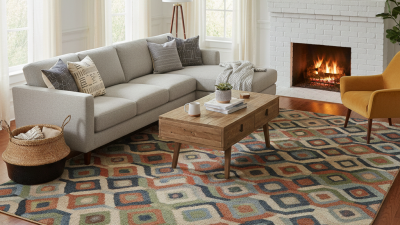
Geometric rugs carry more than visual order. They often preserve regional symbols, weaving methods, and daily stories. For global buyers, ten influential styles include Moroccan lattice, Berber diamond, Anatolian medallion, Persian stepped motifs, Turkish kilim, Central Asian gul patterns, Andean bands, West African checker designs, Japanese asanoha, and Scandinavian folk geometry. Each style has a distinct rhythm. Some use sharp triangles, while others rely on softened lines and repeated borders.

In practical sourcing, I examine the rug’s structure before judging its appearance. Handwoven kilims usually feel firm and flexible. Dense wool piles offer warmth, but they may shed during early use. Natural dyes can create gentle variation, which is not always a defect. I also check edge finishing, backing stability, fiber content, and colorfastness. These details help buyers compare products honestly across markets.

Cultural context deserves equal attention. A diamond motif may represent protection in one tradition, but sellers sometimes describe it too broadly. That is a weakness worth questioning. Design names can become simplified for international sales. Buyers should request clear production details, artisan information, and care guidance. A traditional-inspired rug can suit a modern room without copying sacred symbols carelessly. Measure the space twice. Proportions matter more than trends.

Choosing Geometric Rugs by Room, Size, Material, and Function

Top 10 Geometric Rug Styles for Global Buyers

Choosing a geometric rug starts with the room, not the pattern. In a compact living room, use small diamonds or narrow stripes. They create rhythm without overwhelming the floor. Large rooms can handle bold grids, arches, hexagons, or asymmetrical blocks. Measure the seating area before ordering. Ideally, the front legs of major furniture should rest on the rug. I sometimes break this rule in small rooms, but the result can feel visually disconnected.

Size also affects proportion. A rug should leave a visible border around the room’s edges. In dining spaces, choose a size that extends beyond pulled-out chairs. Bedrooms usually benefit from a wider rug beneath the bed. Low-pile wool or tightly woven synthetic fibers work well in busy areas. They are easier to vacuum and less likely to catch chair legs. Soft, higher-pile textures feel warmer beside a bed, though they require more careful maintenance.

Material should match function and local conditions. Wool offers resilience, warmth, and natural texture, but it may need professional cleaning. Polypropylene resists moisture and suits covered outdoor areas or family spaces. Flatweave cotton feels light and practical, but it can shift without a quality rug pad. Check fiber content, backing, and care instructions before purchase. Colors may also appear different under daylight, warm bulbs, or humid conditions. Samples help, although they never perfectly represent a full-size rug.

Global Buying Factors: Quality, Customization, Shipping, and Care

For global buyers, geometric rugs begin with material evidence, not attractive images. Inspect fiber density, backing stability, edge binding, and color consistency through detailed samples. Wool often offers warmth and resilience, while recycled synthetics can simplify cleaning and control costs. Ask for abrasion results and dye fastness records. A close-up sample reveals more than a polished showroom photograph. Still, quality judgments can fail when lighting changes. Request daylight photos before approving a large order.

Customization should match the room, market, and production limits. Buyers can adjust dimensions, border width, pile height, and neutral or vivid color palettes. Yet every added option may increase sampling time, minimum quantities, or production risk. Confirm a signed specification sheet with measurements, tolerances, materials, and packaging details. I have seen a small pattern shift make a large room feel visually unbalanced. That mistake was preventable, but not every supplier explains it early. Use a physical pre-production sample for substantial orders.

Shipping plans need more than a freight quote. Check carton dimensions, moisture protection, labeling, customs documents, and delivery responsibility. Rolled rugs may arrive with temporary creases. Dense geometric lines can expose them immediately. Allow unpacking time, ventilation, and careful flattening before installation. Care instructions should reflect real households, including pets, spills, sunlight, and underfloor heating. A low-pile rug may suit busy spaces, but it is not maintenance-free. Vacuum gently, rotate it periodically, and test cleaning methods in a hidden area. I would not promise perfect color matching across batches; natural and screen-based variation remains possible.

Top 10 Geometric Rug Styles for Global Buyers: Quality, Customization, Shipping, and Care

A practical comparison of construction, sourcing flexibility, logistics, and maintenance requirements.

No. Geometric Rug Style Visual Characteristics Common Materials Typical Construction & Quality Indicators Customization Potential Shipping Considerations Care Requirements Best Global Buying Use
1 Moroccan Diamond Repeating diamonds, lozenges, and bold contrast lines with a relaxed tribal appearance. Wool, cotton, polypropylene, and polyester. Hand-knotted or hand-tufted wool offers texture and resilience; machine-made synthetic versions provide consistent sizing and lower cost. High: colors, border width, pile height, dimensions, and repeating motifs can usually be adjusted. High-pile wool can be bulky when rolled. Confirm roll diameter, moisture protection, and compression limits before export. Vacuum regularly without an aggressive beater bar; blot spills quickly and rotate periodically to reduce uneven wear. Residential living rooms, bedrooms, hospitality spaces, and relaxed contemporary interiors.
2 Abstract Linework Irregular curved lines, arches, loops, and asymmetrical forms inspired by modern art. Wool, viscose, polyester, polypropylene, and blended fibers. Look for dense, even pile, secure edging, colorfast dyes, and a stable backing with minimal shedding. Very high: artwork, line thickness, color palette, scale, and custom room dimensions are adaptable. Custom shapes and oversized formats may require non-standard packing or freight handling; request a rolled-packing diagram. Use low-suction vacuuming. Viscose-rich surfaces are sensitive to moisture and should generally receive professional cleaning. Design-led residential projects, offices, galleries, hotels, and premium retail interiors.
3 Chevron and Herringbone V-shaped or broken zigzag patterns that create directional movement and visual rhythm. Wool, polypropylene, polyester, cotton, and recycled synthetic fibers. Pattern alignment, straight edges, consistent color changes, and a firm backing are important quality checks. High: pattern scale, stripe width, color contrast, dimensions, and orientation can be specified. Generally efficient to roll and palletize. Verify pattern direction on labels so installation orientation is clear. Regular vacuuming and prompt spot cleaning are suitable for most synthetic versions; protect wool from excessive moisture. Hallways, dining areas, offices, retail floors, and spaces needing a strong directional effect.
4 Hexagonal and Honeycomb Six-sided cells arranged in regular grids or irregular organic formations. Wool, nylon, polypropylene, polyester, and cotton blends. Check that cell shapes remain consistent, seams are flat, and the backing prevents curling at the edges. High: cell size, geometry, color variation, borders, and custom proportions can be modified. Regular rectangular sizes ship efficiently. Irregular outlines may need protective edge guards and additional dimensional checks. Vacuum along the pattern without catching loose edges; use a rug pad to minimize movement and edge stress. Children’s rooms, contemporary homes, creative offices, cafés, and modern hospitality settings.
5 Geometric Medallion Central polygonal or radial motif surrounded by structured borders and repeating accents. Wool, polypropylene, polyester, viscose accents, and cotton. Dense construction, crisp motif definition, balanced symmetry, and colorfast yarns indicate better quality. Medium to high: central motifs, border details, colors, pile height, and size can be adjusted. Rectangular formats are easy to consolidate. Protect corners and avoid folding thick rugs, which may create permanent creases. Rotate every few months in high-traffic areas and use professional cleaning when deep soil or staining occurs. Dining rooms, entryways, formal living areas, hotels, and classic-modern interiors.
6 Trellis and Lattice Interlocking diamonds, squares, or arched lattice lines arranged in a repeating framework. Polypropylene, polyester, wool, cotton, and recycled PET fibers. Even pattern registration, clean binding, low color bleeding, and a dense surface are useful inspection points. High: line thickness, background color, motif scale, borders, and custom dimensions are commonly configurable. Usually lightweight to medium-weight and suitable for parcel or consolidated freight, depending on size and pile. Many synthetic versions tolerate routine vacuuming and mild spot cleaning; follow the fiber-specific label. High-traffic homes, rentals, offices, outdoor-covered areas, and value-focused projects.
7 Checkerboard and Grid Alternating squares, rectangles, or grid lines with a clear modular structure. Wool, cotton, polypropylene, polyester, and nylon. Straight lines, square corners, uniform pile height, and a non-slip or dimensionally stable backing are important. Very high: buyers can change grid scale, tile proportions, contrast, border treatment, and overall size. Flat-woven or low-pile versions are compact and economical to ship; large pieces should be rolled rather than sharply folded. Easy to maintain when low-pile. Vacuum in both directions and treat spills before they migrate across the grid. Modern offices, kitchens, corridors, hospitality areas, and minimalist residential spaces.
8 Art Deco Fan and Sunburst Radiating fans, stepped geometry, arcs, and symmetrical sunburst arrangements. Wool, viscose, polyester, nylon, and blended fibers. Fine pattern definition, controlled sheen, stable backing, and clean finishing around curved or stepped motifs matter most. High: motif orientation, metallic-look accents, colors, border geometry, and scale can be tailored. Directional designs need clear top-end markings. Shiny or delicate yarns should be protected from abrasion during transit. Use a soft vacuum setting and avoid harsh chemical cleaners that can alter sheen or damage delicate fibers. Boutique hotels, reception areas, luxury apartments, restaurants, and statement interiors.
9 Kilიმ-Inspired Geometric Angular medallions, stepped diamonds, small repeating motifs, and heritage-style color layouts. Wool, cotton, polypropylene, polyester, and wool-synthetic blends. Flat-woven construction is durable and relatively light; inspect selvedges, warp stability, and pattern clarity. Medium to high: colors, motif density, border width, and dimensions can be adapted while preserving the overall character. Flat-weave rugs are generally space-efficient for export and can often be rolled tightly without excessive bulk. Vacuum gently, avoid pulling raised edges, and use a rug pad to improve comfort and prevent abrasion on hard floors. Dining rooms, corridors, entry areas, layered-rug schemes, and high-use residential spaces.
10 3D Sculpted Geometry Raised lines, carved blocks, layered polygons, and contrasting pile heights that create tactile relief. Wool, polyester, polypropylene, viscose blends, and solution-dyed synthetics. Check carving precision, pile recovery, secure tufting, backing adhesion, and consistent height transitions. Very high: relief depth, motif placement, texture combinations, color blocks, and custom sizes can be developed. Thick pile increases cubic volume and freight cost. Roll loosely, use protective wrapping, and avoid compression that can flatten the relief. Vacuum with a height-adjustable setting and avoid rotating brush heads that may catch raised fibers or carved details. Premium bedrooms, lounges, executive offices, showrooms, and low-to-medium traffic areas.
Buyer note: Actual performance, lead time, landed cost, and care instructions depend on fiber composition, construction method, dimensions, backing, destination regulations, packaging, and transport mode. Request a physical sample, technical specification sheet, packing dimensions, net/gross weight, and care label before placing a production order.