Leave Your Message

What Are the Top Hotel Carpet Types in 2026?

Hotel Carpet does more than soften a guest’s first step into a room. It absorbs footsteps in a busy corridor, frames the bed, and faces rolling suitcases, spills, and daily cleaning. In 2026, choosing the right type means balancing appearance with durability, maintenance, comfort, and cost. A plush surface may feel inviting underfoot, yet flatten quickly in a high-traffic lobby. A dense, patterned carpet can hide small marks, though it may feel less luxurious in a quiet guest room.

This guide compares the leading hotel carpet types, including broadloom, carpet tiles, woven designs, and patterned loop constructions. It considers where each option works best, what its fibers and backing can handle, and how installation affects long-term upkeep. Small details matter: a trolley wheel catching a loose seam is not a design feature. Nor is a beautiful sample enough to predict performance across an entire property.

Expert insight belongs in this conversation, too. However, no source quotation or named specialist was provided with this brief, so attributing a statement to an expert would risk inventing evidence. The recommendations here should be checked against manufacturer specifications, cleaning requirements, and the hotel’s actual traffic patterns. Real properties vary. That part is easy to overlook. Use the coming sections to compare options carefully, then match the carpet to the space—not just the showroom sample.
What Are the Top Hotel Carpet Types in 2026?

Top Hotel Carpet Types in 2026: Broadloom, Tile, Woven, and Tufted

Broadloom carpet creates a continuous surface with few visible seams, which can make guest corridors feel calm and cohesive. It suits spaces with predictable layouts, but spills may require cleaning across a larger area. Replacing a damaged section can also be difficult. Check the carpet backing and subfloor conditions before installation, especially near entrances where wet shoes are common.

Carpet tile offers a practical alternative for busy lobbies and meeting rooms. Staff can replace individual tiles after stains or wear, though seams may show if tiles shift or pile direction varies. Details matter. Woven carpet has a structured surface and can deliver crisp patterns, but typically costs more and needs skilled installation. Tufted carpet allows varied textures and patterns at a wider range of budgets. It may need closer attention to pile wear in heavily used zones. Quiet, but not invincible.

I would not treat one type as universally best; that judgment can be wrong when traffic, cleaning routines, or maintenance budgets change. Compare samples under the hotel’s actual lighting, then consider how carts, luggage wheels, and daily vacuuming affect each surface. A small sample can look convincing, yet perform differently across a whole floor.

Compare Nylon, Polyester, and Wool by Durability, Cost, and Maintenance

Nylon remains a practical choice for hotel corridors, lobbies, and other high-traffic areas. Its fibers generally recover well from compression, so furniture marks and flattened paths may be less noticeable. Initial costs can be higher than polyester, but longer service life may offset that difference. Results depend on pile construction, backing, and cleaning routines.

Polyester often costs less upfront and can offer rich color and a soft feel. It may suit guest rooms with moderate traffic, though busy hallways can show wear sooner. Wool feels warm and naturally textured, but it usually costs more and needs careful moisture control. Cleaning mistakes matter. No fiber is maintenance-free, and local labor costs can change the long-term comparison. I would compare installed samples under the hotel’s actual lighting before deciding.

Tips: Ask suppliers for samples and test them with realistic foot traffic and routine cleaning. Check the care instructions, warranty terms, and replacement availability. Keep a small spare section. It helps when an isolated area needs repair.

Match Carpet Construction to Guestrooms, Corridors, and Meeting Areas

What Are the Top Hotel Carpet Types in 2026?

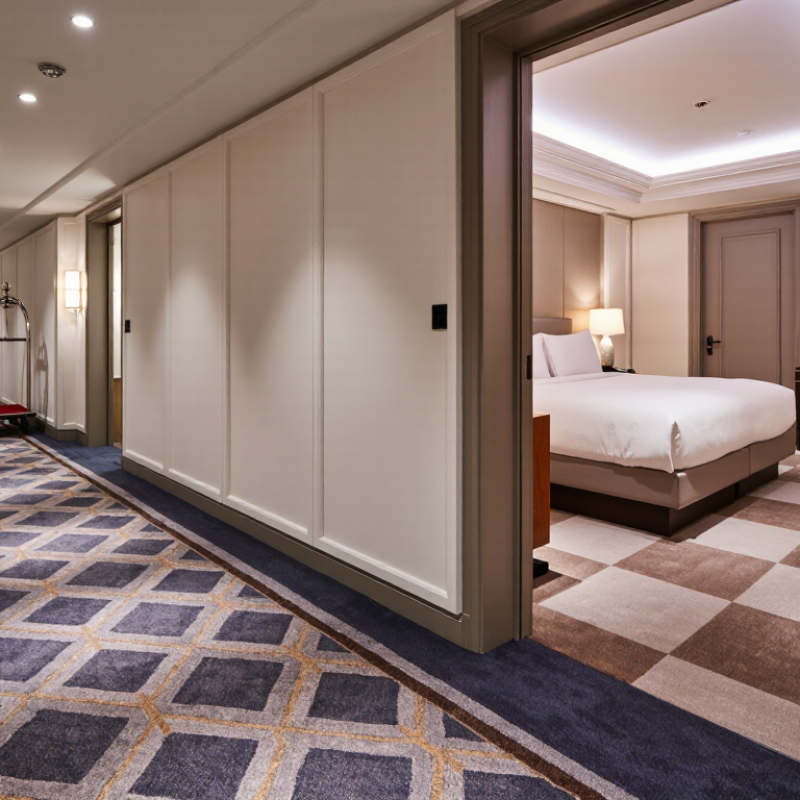
Match carpet construction to how each space is used. In guestrooms, textured cut pile offers a softer feel underfoot and helps soften footsteps. Choose a dense construction that resists crushing beside beds and at entryways. A patterned surface can also make small marks less obvious between cleanings. Comfort matters, but it should not replace maintenance planning.

Corridors take repeated foot traffic and rolling luggage. Dense, low-profile loop pile is often a practical choice because it limits visible crushing and supports easier vacuuming. Check samples under bright corridor lighting; seams and shading can look different across a long hallway. The 2024 AHLA State of the Industry report forecast U.S. hotel occupancy at 63.6%, a reminder that public areas may face steady use. Not all traffic is alike.

Meeting rooms need flexibility. Modular carpet tiles allow localized replacement after spills, while a low-profile surface can better accommodate chairs and carts. The 2024 J.D. Power North America Hotel Guest Satisfaction Index Study drew on 39,219 guest evaluations, emphasizing the importance of the overall stay experience—not carpet alone. Specify wear testing, stain-cleaning procedures, and replacement access with the installer. A sample can mislead. Test it under actual room lighting and with real furniture; even careful specifications sometimes miss how a space feels in daily use.

What Are the Top Hotel Carpet Types in 2026? Match Carpet Construction to Guestrooms, Corridors, and Meeting Areas

Carpet Type Typical Construction Best-Fit Hotel Areas Practical Strengths Considerations Relative Cost
Tufted Cut-Pile Broadloom Yarn loops are tufted into a backing and cut to create an even, soft pile. Nylon and wool are common fiber choices. Guestrooms and suites Comfortable underfoot, creates a quiet and residential feel, and can be installed wall-to-wall for a continuous appearance. Choose a pile and fiber suited to the cleaning plan. Deep or plush piles can show footprints and may be less convenient for luggage wheels. Moderate to high, depending on fiber, pile, and specification
Patterned Loop-Pile Broadloom Tufted yarn remains in loops; variation in yarn color, loop height, or pattern creates a textured surface. Guestroom corridors, elevator lobbies, and other busy circulation areas Textured patterns can help disguise everyday soil and wear. A firm, dense surface is generally suitable for frequent foot traffic and rolling luggage. Specify commercial-grade construction and compatible cushion or backing. Inspect seams and transitions in high-traffic zones. Moderate to high
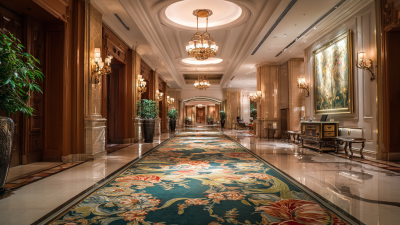
Woven Axminster Carpet Pattern and pile yarns are woven together with the backing, allowing detailed, multicolor designs. Formal corridors, ballrooms, and prominent public spaces Supports intricate custom patterns and a tailored appearance. Woven construction is widely used for demanding hospitality interiors. Typically requires a larger initial investment and skilled installation. Confirm that the chosen specification meets project fire and maintenance requirements. High
Modular Carpet Tiles Small carpet sections are manufactured with a backing and installed as individual units, often in a grid or staggered layout. Meeting rooms, conference areas, and selected back-of-house spaces Damaged or heavily stained sections can often be replaced individually. Modular formats can simplify phased installation and access to the floor below. Choose a low, dense pile for areas with movable furniture. Keep matching replacement tiles available because dye lots and production runs can vary. Moderate; lifecycle cost depends on replacement needs and installation
Level-Loop Carpet Uncut loops of similar height form a compact, textured surface; it may be tufted or woven. Corridors, meeting rooms, and other high-use areas Low-profile construction can handle frequent foot traffic and allows chairs and luggage to move more easily than on a deep pile. Check loop size and density for the intended use. Snagged loops can be difficult to repair, so avoid unsuitable furniture glides and sharp edges. Low to moderate, depending on construction and fiber
Patterned Cut-and-Loop Carpet Combines cut and uncut yarn loops to create a raised pattern or textured design. Guestrooms, meeting rooms, and lower- to medium-traffic public areas Offers visual depth and can help soften a room acoustically while providing a less uniform appearance than plain cut pile. Pattern scale and pile profile affect appearance, cleaning, and furniture movement. Review a large sample under the room’s lighting before selection. Moderate to high

Selection note: Performance depends on the specified fiber, pile density, backing, installation, maintenance, and traffic. Verify fire-code compliance, indoor-air-quality documentation, cleaning compatibility, and warranty conditions for the project location.

Assess Wear with ASTM D5252 Hexapod and ASTM D3884 Abrasion Tests

For hotel carpet selection in 2026, fiber labels alone cannot predict how a lobby will look after months of luggage wheels and gritty shoes. ASTM D5252-17(2022) describes the Hexapod Tumble Drum method, which flexes and tumbles carpet to assess changes in appearance. ASTM D3884-22 uses a rotary platform abrasion method to evaluate surface wear. These are test methods, not universal pass-or-fail ratings. Compare results only when carpet construction, backing, conditioning, and test settings are comparable.

Ask suppliers for the full laboratory report, including cycle counts, specimen details, and the appearance-rating scale used. Hexapod testing can reveal pile distortion and flattening; abrasion testing helps show how the face yarn resists rubbing. Look closely at edges and tufts. Small changes matter. In a corridor, a flattened traffic lane may be more noticeable than modest fiber loss under a lab abrasion head. That is an imperfect comparison, but a useful one.

For cut-pile nylon, patterned constructions, or wool blends, request results for the exact proposed construction rather than a similar sample. Also consider chair-leg scuffing and cleaning frequency; neither ASTM test recreates every hotel condition. A 2024 Carpet and Rug Institute commercial-carpet guide emphasizes matching carpet specifications to expected traffic and maintenance needs. Use that guidance alongside ASTM data, then inspect a sample after realistic rolling-load and cleaning trials. A polished report helps, but field behavior can still surprise you.

Top Hotel Carpet Types in 2026: A Wear-Suitability Guide

Qualitative comparison of common commercial carpet constructions for hotel use. Ratings are directional guidance, not laboratory measurements or ASTM test results.

How to assess wear: ASTM D5252 evaluates carpet appearance retention using a Hexapod Tumbler Tester; ASTM D3884 evaluates abrasion resistance using a rotary platform abrasion tester. Results depend on the specific carpet, test conditions, and evaluation criteria. Consult test reports for product-level comparisons.

Verify Safety: ASTM E648 Class I Requires ≥0.45 W/cm²; Check CRI Green Label Plus

Hotel carpet selection in 2026 should begin with documented performance, not color swatches alone. For many projects, verify ASTM E648 Class I, with a critical radiant flux of at least 0.45 W/cm². This test measures a flooring material’s response to radiant heat under specified conditions; it does not mean the carpet cannot burn. Confirm the report matches the exact carpet construction, backing, and installation assembly. Requirements can vary by occupancy and location, so ask the project’s fire-safety professional to review applicable codes. A sample looked convincing once; the paperwork still mattered more.

Tips: Request current test documents and CRI Green Label Plus certification for the exact product. Green Label Plus addresses VOC emissions, not flame performance, so treat it as a separate indoor-air-quality check. Keep both records with project submittals.

For guestrooms, cut pile may feel softer, while low-loop or patterned carpet can disguise suitcase tracks. Corridors face rolling loads, spills, and frequent cleaning; dense, resilient constructions are often practical, though maintenance trials can reveal surprises. Check seams, transitions, cleaning instructions, and replacement availability before ordering. Hallway lighting can change how a sample looks. Test a larger piece on site, then inspect it after cleaning. There is no perfect swatch.