Leave Your Message

2026 Top Thick Prayer Mat Suppliers for Global Buyers

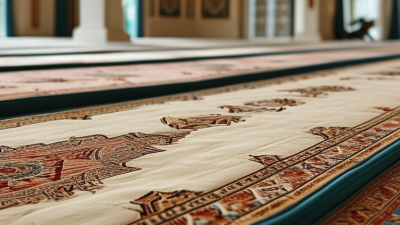
Global buyers are paying closer attention to comfort, durability, and responsible sourcing when selecting a Thick Prayer Mat supplier. The global carpet market was valued at approximately USD 72.39 billion in 2023, according to Fortune Business Insights’ Carpet Market report. It is projected to grow steadily through 2032. This wider market trend reflects stronger demand for practical household textiles, including prayer mats used in homes, mosques, hotels, and travel settings.

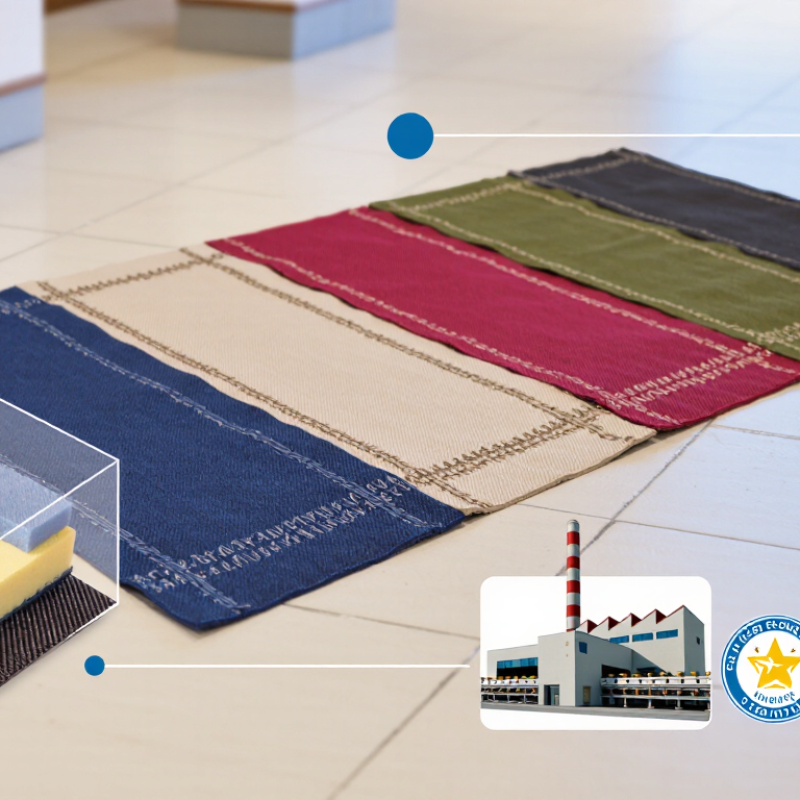
Material choices matter. Textile Exchange’s Materials Market Report 2024 states that global fiber production reached about 132 million tonnes in 2023. It also highlights the continuing dominance of polyester and the need for better recycled and traceable materials. For buyers, this means supplier evaluation should go beyond attractive photographs. Check foam density, surface softness, edge stitching, backing grip, moisture resistance, and carton protection. Ask for samples. Test them on tile, carpet, and wooden floors. Small details become important during daily use.

A reliable supplier should provide clear factory information, consistent specifications, production records, and quality-control evidence. Certifications such as OEKO-TEX Standard 100 may support safer material claims, but certificates should be verified. No ranking is flawless. A supplier may look excellent on paper yet miss color consistency or packing requirements. Our 2026 supplier review considers manufacturing experience, export capability, customization, communication, sample performance, and evidence-based quality practices. The strongest partners are not always the cheapest. They are dependable when orders become larger, timelines become tighter, and customer expectations become less forgiving.
2026 Top Thick Prayer Mat Suppliers for Global Buyers

How Thick Prayer Mats Are Defined and Evaluated in 2026

2026 Top Thick Prayer Mat Suppliers for Global Buyers

How Thick Prayer Mats Are Defined and Evaluated in 2026

In 2026, a thick prayer mat is not defined by height alone. Buyers should check compressed thickness, foam density, surface softness, and backing stability. A mat measuring 15 millimeters may flatten quickly under daily kneeling. Another measuring 10 millimeters may provide better support through stronger foam and tighter stitching. Practical evaluation starts with a ruler, a pressure test, and repeated folding. Inspect the knee area after several cycles. It should recover without deep dents, cracking, or uneven edges. Materials should also be checked for odor, moisture resistance, and color transfer. These details matter in warm, humid shipping environments.

Comfort remains personal. Some users prefer a soft, cushion-like surface, while others need firmer support for balance. Global buyers should request product samples before placing large orders. Compare measurements from several points, not only the center. Ask suppliers for material specifications, inspection records, packaging details, and clear tolerance ranges. Independent testing can strengthen confidence, especially when supplier claims seem unusually perfect. My own assessment would still include long-term use, because laboratory figures cannot fully represent household wear.

Tips: Press the mat with a flat weight for one minute, then measure recovery. Check the underside on smooth flooring. Review stitching at corners and edges. Keep one sample for future comparison. A small flaw can reveal a larger quality-control problem.

Key Features of Reliable Global Prayer Mat Suppliers

Reliable global prayer mat suppliers show their quality in measurable details, not polished catalog images. For thick prayer mats, buyers should check foam density, surface softness, edge stitching, and resistance to repeated folding. A stable mat should recover its shape after shipping and daily use. Ask for samples from different production batches. One sample is not enough.

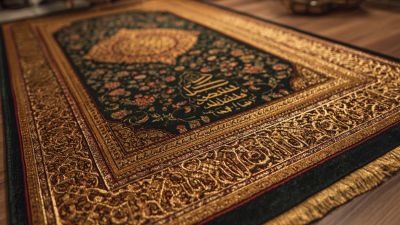
Experienced suppliers provide clear specifications, realistic lead times, and inspection records. They explain material composition, carton dimensions, weight, and packing methods without vague claims. Their production teams should understand color variation, embroidery tension, and moisture protection during long-distance transport. Useful suppliers also offer pre-shipment photos, batch labels, and responsive answers across time zones. Small details matter.

Communication reveals reliability. A supplier that admits a fabric shortage or delayed shipment early is often safer than one promising everything. I have found that low prices can hide weak backing, loose threads, or poor carton protection. Buyers should compare total landed cost, not only the unit price. Ethical sourcing and lawful workplace practices also deserve verification through documented policies or independent audits. Some quality checks remain imperfect, especially when inspections cover large orders. Regular sampling and written corrective actions reduce that risk for global buyers.

Regional Supplier Profiles and Manufacturing Strengths

Regional supplier selection matters when sourcing thick prayer mats for global distribution. Manufacturers in Turkey often excel at dense woven surfaces, geometric patterns, and refined finishing. Their workshops may suit buyers seeking premium presentation and medium production runs. Suppliers in China commonly offer broad customization, including thickness options, anti-slip backing, private packaging, and large-volume capacity. Their strength is coordinated production, but buyers should verify material consistency between samples and bulk orders.

Manufacturers in India often bring strong textile craftsmanship, color development, and flexible small-batch production. Some facilities can produce cotton-rich, polyester, or blended mats with varied cushioning levels. Southeast Asian suppliers may provide competitive labor costs and practical export packaging, although production lead times can change during peak seasons. I have found that “thick” is not a sufficient specification. Buyers should request pile height, total weight, foam density, backing grip, edge stitching, and dimensional tolerance. A soft sample can still flatten quickly. That detail is easy to miss.

Tips: Ask for a five-piece sample set, not one piece. Test folding, moisture exposure, odor, and surface recovery. Confirm factory inspection records, packaging compression limits, and replacement procedures before placing a deposit. Small inconsistencies often become expensive at container scale.

How to Compare Quality, Pricing, and Customization Options

2026 Top Thick Prayer Mat Suppliers for Global Buyers

Comparing suppliers requires more than checking thickness or a low quotation. Request samples with measured pile height, surface density, backing strength, and edge stitching. A 12-millimeter mat may feel soft but compress quickly under daily use. Ask suppliers to provide test records for colorfastness, dimensional stability, and washing performance. ISO 105-C06 and ISO 6330 can support more consistent laboratory comparisons. These standards do not guarantee comfort. Hand testing still matters.

Material choice affects both pricing and market positioning. Textile Exchange reported that polyester represented about 57% of global fiber production in 2023, while cotton accounted for roughly 19%. Polyester often supports lower unit costs and sharper printed designs. Cotton may offer a warmer hand feel, but it can raise weight, drying time, and freight expense. Compare the complete landed cost, including sampling, packaging, minimum order quantity, inspection, and shipping. A cheaper quotation can become expensive after customization.

Tips: Request three samples with different densities. Press each mat for ten seconds, then check recovery. Examine corners after rolling. Ask suppliers to provide a written tolerance, not a verbal promise. Custom options should include color matching, woven labels, packaging size, and carton markings. Confirm artwork ownership and production approval steps. One weakness remains: supplier test data may not reflect household use. Conduct a small pilot order before scaling. Track odor, shedding, curling, and customer comfort for thirty days.

Steps for Selecting and Ordering from an International Supplier

Selecting an international prayer mat supplier requires more than comparing catalog prices. Check the supplier’s export history, factory address, production capacity, and response quality. Request recent product photos, test samples, and a written specification sheet. Measure pile height, foam thickness, surface density, backing grip, and folded dimensions. A thick mat can feel soft but still flatten quickly.

Ask for a pro forma invoice before ordering. It should show unit price, minimum order quantity, packaging, shipping term, payment stages, production time, and inspection rules. UNCTAD reports that maritime shipping carries over 80% of global trade by volume, so freight planning matters. Confirm carton size, gross weight, moisture protection, and the destination port. The World Bank’s 2023 Logistics Performance Index also highlights customs and infrastructure as major delivery factors. Delays are not always the supplier’s fault, but unclear documents make them worse.

Tips: Start with a small trial order. Compare three samples after repeated folding and cleaning. Use an independent inspection before final payment. Baymard Institute’s 2024 benchmark reports a 70.19% average online cart-abandonment rate, often linked to unexpected costs. Show landed cost clearly. My first quotation comparison missed inner-carton fees; that mistake changed the real unit price. Ask more questions than feels necessary.

2026 Top Thick Prayer Mat Suppliers for Global Buyers

International Supplier Selection and Ordering Priorities

This buyer scorecard uses a 100-point procurement model for comparing thick prayer mat suppliers. Product quality and material specifications should be verified through samples, while compliance, production capacity, communication, shipping terms, and payment conditions should be confirmed before placing an international order.