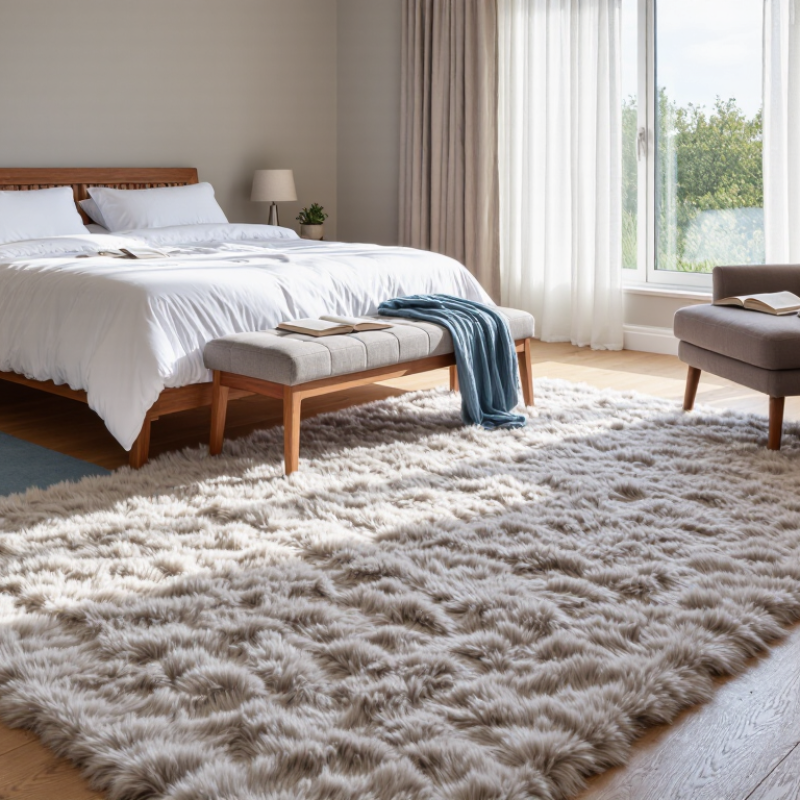
Bedroom Fur Carpet is becoming a practical comfort choice for bedrooms, reading corners, and rental interiors. Buyers want softness, warmth, and a calmer visual atmosphere. Yet appearance alone can mislead. A thick, cloud-like pile may flatten quickly beneath a bedside table. Loose fibers may also collect dust around skirting boards.
Market evidence supports careful comparison. Grand View Research valued the global carpets and rugs market at approximately US$72.39 billion in 2022. Its report also projects continued growth through 2030, driven partly by residential renovation and changing interior preferences. Fortune Business Insights similarly identifies residential demand as a major market influence. These figures describe the wider category, not Bedroom Fur Carpet alone. That distinction matters.
This guide examines ten options for global buyers using practical criteria. These include fiber composition, pile recovery, backing stability, odor, cleaning instructions, packaging, and supplier transparency. Faux fur, polyester, acrylic, and blended constructions can perform differently under daily use. Check the label. Confirm dimensions in centimeters and inches. Look for independent test information, such as colorfastness, abrasion resistance, and slip performance. ISO and regional textile standards can help, but certification claims still require verification.
Softness is only one part of value. Maintenance matters more than many product photos suggest. A vacuum attachment, gentle shaking, and prompt spot cleaning may extend service life. However, no carpet stays perfect forever. This review also recognizes weaknesses, including possible shedding, flattening, and inconsistent online color reproduction. The best choice depends on climate, flooring, household routines, and responsible purchasing priorities.
A bedroom fur carpet should feel warm, but comfort is only one test. Choose a dense, low-to-medium pile that resists matting beside the bed. Loose, extra-long fibers can trap dust, hair, and moisture. That matters during humid nights. The U.S. Environmental Protection Agency reports that indoor pollutant levels are often two to five times higher than outdoor levels. Therefore, select materials with documented low-emission performance, such as products tested under the Carpet and Rug Institute’s Green Label Plus program. Ask for laboratory records, not vague “eco-friendly” claims.
Backing and maintenance also determine bedroom suitability. A stable, non-slip backing reduces movement on smooth floors, while breathable construction helps limit damp odors. Wool can offer resilience, but some sleepers may react to natural fibers or treatment chemicals. Synthetic faux fur is often easier to wash, yet quality varies sharply. Check washing temperatures, colorfastness, shedding, and drying instructions before buying. The American Cleaning Institute recommends regular vacuuming and prompt stain removal for textile floor coverings. Use a vacuum with adjustable suction; aggressive brushes may damage soft fibers. A washable layer underneath helps, although it can still bunch. I would not ignore that flaw.
Global buyers should verify flammability, chemical labeling, and electrical safety requirements in their destination market. Bedroom products should also avoid sharp latex odors and excessive loose fibers around infants or pets. Request a sample and leave it indoors for 48 hours. Notice the smell. A carpet that looks luxurious online may feel rough, shed heavily, or slip after installation. Real bedroom suitability is measured after repeated use, not only in a product photograph.
Ten Popular Fur Carpet Options for Buyers Worldwide
Fur carpets add warmth, texture, and a softer visual layer to bedrooms. Faux sheepskin works well beside a bed, especially on cold tile floors. Long-pile wool offers natural insulation and a calm, dense feel. Faux rabbit fur feels smooth, but it may show flattened areas after frequent walking. Mongolian-style faux fur creates bold texture for larger rooms. Polyester shag is usually affordable and dries quickly after careful cleaning.
Recycled PET fur-look rugs suit buyers seeking synthetic fibers with lower material waste. Cotton-tufted rugs feel lighter and work better in warm climates. Cowhide-style synthetic rugs bring contrast without using animal hide. Washable short-pile rugs are practical for children’s rooms or rental homes. Hand-finished wool blends provide depth, though small variations are normal. That unevenness is not always a defect. It can show the material’s character.
Check the backing before buying. A stable, non-slip layer protects polished wood and reduces shifting near the bed. Measure the room, then leave enough floor space around the rug for easier cleaning. Buyers in humid regions should choose breathable fibers and avoid thick piles that hold moisture. In dry climates, dense fur can collect dust and require weekly vacuuming. Always review care instructions, fiber details, and return terms. Softness in a product photo can be misleading. Touch, pile height, and shedding often feel different in person.
Indicative retail price ranges for common fur and fur-style bedroom carpet options, shown in USD per square metre. Prices vary by material quality, size, origin, processing, shipping and local taxes.
Natural sheepskin, lambskin, alpaca and cowhide options generally cost more because of material sourcing and processing. Polyester faux fur and flokati-style wool carpets are usually more accessible for buyers seeking easier maintenance and broader size availability.
A bedroom fur carpet should feel soft, stable, and easy to maintain. Grand View Research valued the global carpet and rugs market at approximately US$72.39 billion in 2023. That growth gives buyers more materials, but also creates confusing quality claims.
Compare the fiber before judging appearance. Wool offers natural resilience and warmth, while polyester faux fur usually provides lower cost and consistent color. Textile Exchange’s 2024 Materials Market Report states that polyester represented about 57% of global fiber production in 2023. However, fiber type alone cannot predict comfort. Check pile density, backing flexibility, shedding, and odor from a physical sample. Feel the difference.
Size affects both comfort and safety. For a queen bed, a carpet extending 45–60 centimeters beyond each side usually creates a balanced landing area. Measure twice. A smaller runner can suit narrow rooms, but it may slide beside the bed. Look for a dense, secure backing and test it on the actual floor. Industry testing standards, including ISO 12951-1, evaluate carpet behavior under repeated use, yet bedroom comfort remains partly subjective. A thick pile may feel luxurious, but it can trap dust and become difficult to vacuum. My practical preference is not always the thickest option; moderate pile height often offers a better compromise between softness, cleaning, and long-term shape retention.
Choosing a bedroom fur carpet requires more than judging softness or color. Safety begins with verified materials, secure backing, and low-odor construction. A supplier should provide fiber details, cleaning instructions, and test records for dyes, formaldehyde, and other restricted substances. The carpet should lie flat, with no loose strands that could create slipping or choking risks for children and pets.
Sustainability depends on the material’s full life cycle. Recycled fibers or responsibly sourced wool may reduce environmental pressure, but neither option is automatically sustainable. Ask about water use, chemical processing, worker conditions, packaging, and expected lifespan. A durable carpet that survives years of bedroom use can be better than a cheap product replaced twice. Look for credible certificates, traceable suppliers, and independent laboratory reports. Website claims alone are weak evidence.
Ethical purchasing also requires checking whether the fur is genuine, synthetic, recycled, or blended. Animal-origin materials need clear origin information and lawful sourcing documentation. Import rules, labeling standards, and chemical limits differ between markets, so local verification matters. I would not trust vague phrases such as “eco-friendly” without measurable proof. No checklist is perfect. Even experienced buyers can overlook packaging waste or difficult end-of-life disposal. A practical choice balances comfort, indoor safety, environmental impact, and honest supplier communication. Ask specific questions before payment. Keep the answers.
A practical comparison of fur, fur-look, and natural-pile bedroom floor coverings. Performance figures are typical industry ranges and should be verified against supplier test reports.
| Option | Main Material | Typical Pile & Feel | Bedroom Safety Considerations | Sustainability Profile | Ethical Purchasing Checks | Care & Expected Service Life | Best For |
|---|---|---|---|---|---|---|---|
| 1. Responsible Wool Shearling-Style Rug | Sheepskin or wool fleece with a leather or textile backing | Natural pile generally 25–60 mm; warm, springy, and highly insulating | Naturally difficult to ignite compared with many synthetics, but still requires applicable fire testing. Can retain dust and lanolin; avoid if wool sensitivity is known. Use a stable non-slip pad. | Renewable fiber and biodegradable under suitable conditions. Animal skin is a durable by-product when sourced transparently, but tanning and transport affect the total footprint. | Request animal-welfare policies, farm traceability, non-mulesing information where relevant, and evidence that tanning uses controlled chemical processes. | Air outdoors, shake gently, spot-clean, and avoid soaking or machine washing. Common service life: approximately 5–10 years with careful use. | Cold bedrooms, bedside zones, and buyers seeking natural insulation |
| 2. Recycled Wool-Blend Shag | Recycled wool blended with virgin wool or a small amount of synthetic fiber | Pile commonly 20–40 mm; dense, soft, and resilient | Wool generally produces less smoke than many plastic fibers, but loose pile may create a trip risk. Select a low-slip backing and keep electrical heaters clear. | Uses recovered textile fiber and can reduce demand for virgin wool. Blends containing nylon or polyester are less straightforward to recycle at end of life. | Verify the percentage of recycled content, country of fiber processing, wastewater controls, and labor-audit documentation. | Vacuum with a height-adjustable setting and clean spills quickly. Approximate service life: 5–12 years depending on traffic and pile density. | High-comfort bedrooms requiring better durability than long faux-fur pile |
| 3. Lyocell Faux-Fur Rug | Cellulosic lyocell fibers made from dissolving wood pulp | Pile commonly 15–35 mm; silky, cool to the touch, and drapable | Low-pile versions are easier to keep clean. The backing, dyes, and adhesives determine VOC and chemical performance; request testing rather than relying only on the fiber name. | Cellulosic and potentially biodegradable, although finishing chemicals, blended backings, and industrial composting conditions affect end-of-life performance. | Request wood-source information, responsible forestry evidence, chemical-recovery data, and proof of restricted-substance compliance. | Usually requires gentle vacuuming and limited moisture. Approximate service life: 3–7 years in a low-traffic bedroom. | Animal-free interiors and warm climates where a lighter, silky texture is preferred |
| 4. Organic Cotton Plush Rug | Organic cotton pile with cotton, jute, or recycled-fiber backing | Pile commonly 8–25 mm; soft, breathable, and less insulating than wool | Generally comfortable for bare feet, but cotton absorbs moisture and can support mildew if kept damp. Choose low-VOC dyes and a firm non-slip underlay. | Renewable and biodegradable. Organic cultivation can reduce pesticide use, but water use, dyeing, and long-distance shipping remain relevant. | Verify organic-fiber percentage, farm-to-factory traceability, safe dyeing, wastewater treatment, and fair-labor controls. | Many designs are washable, but follow the care label to control shrinkage. Approximate service life: 3–8 years. | Children’s bedrooms, warmer climates, and households needing a washable option |
| 5. Recycled PET Faux-Fur Rug | Polyester fibers made partly or fully from post-consumer plastic bottles | Pile commonly 20–50 mm; plush, lightweight, and colorfast | Synthetic fibers can melt under high heat and may generate dense smoke in a fire. Confirm applicable flammability tests, low-VOC backing, and secure edge construction. | Diverts plastic from disposal and usually requires less agricultural land than natural fibers. It is not biodegradable and may release microfibers during washing. | Verify recycled-content percentage, chain-of-custody records, microfiber controls, worker protections, and recyclability of the backing. | Vacuum gently and wash only when permitted. Approximate service life: 4–10 years, depending on pile recovery and backing quality. | Budget-conscious buyers wanting a soft, animal-free, easy-care appearance |
| 6. Hemp-Cotton Textured Pile | Hemp blended with cotton or recycled cellulose fibers | Pile commonly 6–18 mm; textured, breathable, and moderately firm | Shorter pile reduces tripping and dust retention. Moisture should be dried promptly because natural fibers can develop odor or mildew when damp. | Hemp grows quickly and usually requires fewer agricultural inputs than conventional cotton, although retting, dyeing, and transport still influence impact. | Confirm actual hemp percentage, agricultural origin, dye safety, wastewater management, and worker-safety procedures. | Regular vacuuming and prompt spot cleaning are recommended. Approximate service life: 5–10 years. | Minimalist bedrooms and buyers preferring a natural, lower-pile surface |
| 7. Alpaca-Blend Luxury Rug | Alpaca fiber blended with wool, cotton, or a small synthetic component | Pile commonly 15–35 mm; lightweight, warm, and exceptionally soft | Lower lanolin content than many sheep-wool products may suit some users, but fiber sensitivity remains possible. Select a stable backing and verify fire performance. | Renewable animal fiber with good warmth-to-weight performance. Environmental results depend on grazing management, land pressure, processing, and transport distance. | Request herd traceability, non-harmful shearing practices, animal-welfare requirements, land-management information, and labor safeguards. | Professional cleaning is preferable for large pieces. Approximate service life: 5–12 years with low foot traffic. | Premium bedrooms where softness and thermal comfort are priorities |
| 8. Recycled Nylon Long-Pile Rug | Recycled polyamide fibers, often combined with virgin nylon for strength | Pile commonly 25–60 mm; resilient, dense, and highly abrasion-resistant | Long pile can conceal small objects and retain dust. Confirm low-emission backing, fire testing, secure edges, and a suitable anti-slip pad. | Recycled content reduces demand for virgin petrochemical feedstock. Nylon is durable and potentially recyclable through specialized systems, but is not biodegradable. | Check recycled-content verification, chemical restrictions, factory energy data, end-of-life take-back options, and microfiber mitigation. | Professional extraction cleaning may be needed. Approximate service life: 7–15 years in a bedroom. | High-durability applications and households wanting a long-lasting faux-fur appearance |
| 9. Jute-Base Faux-Fur Accent Rug | Synthetic or cellulosic fur-look pile attached to a natural jute backing | Pile commonly 15–40 mm; soft upper surface with a firm, natural-feel base | Jute absorbs moisture and can become brittle or moldy when wet. Inspect for shedding, loose edges, odor, and adhesive emissions before bedroom use. | Jute is renewable and biodegradable, but mixed-material construction complicates recycling. The pile fiber and adhesive may dominate the environmental profile. | Request jute origin, agricultural practices, backing composition, adhesive safety, and evidence of fair working conditions. | Keep dry, vacuum carefully, and avoid soaking. Approximate service life: 3–8 years depending on humidity and backing quality. | Small bedside or decorative areas in dry indoor environments |
| 10. Low-Pile Plant-Fiber Blend | Blend of viscose, cotton, linen, hemp, or other regenerated and natural fibers | Pile commonly 5–15 mm; soft, flat, and easier to walk across than shag | Low pile reduces trip and dust-retention risks. Some regenerated fibers weaken when wet, so request dye, backing, and VOC test results. | Can use renewable or recycled feedstocks, but the sustainability profile varies widely with forestry, farming, chemical recovery, blends, and transport. | Ask for exact fiber percentages, feedstock traceability, chemical-management data, labor standards, and realistic end-of-life instructions. | Frequent gentle vacuuming and limited spot cleaning. Approximate service life: 3–8 years, depending on fiber strength. | Small bedrooms, allergy-conscious users, and buyers preferring easy movement and low pile |

Global Buyer Verification Checklist
A bedroom fur carpet feels warm under bare feet, but its softness requires deliberate care. Long-term comfort depends on fiber density, backing quality, and room humidity. Before buying, check the care label, pile height, and cleaning instructions. Dense, deep pile traps dust and hair more easily. Short pile is usually simpler for busy bedrooms. I once underestimated drying time after spot cleaning. That mistake left a faint damp smell.
Vacuum gently with a clean, suitable attachment once or twice weekly. Use the lowest effective suction setting. Move slowly. For spills, blot immediately with a dry white cloth. Do not rub the fibers aggressively. Avoid soaking the backing. A small amount of mild detergent diluted in water is often safer than concentrated cleaner. Test an hidden edge first. Strong bleach can discolor fibers or weaken backing. For stubborn stains, consult a qualified carpet-care professional.
Rotate the carpet every few months to reduce uneven crushing beneath furniture. Lift heavy items instead of dragging them across the pile. Open windows during dry weather, but avoid prolonged direct sunlight. Moist rooms need extra ventilation. If the underside feels damp, remove the carpet and dry both surfaces completely. Washable designs still need careful temperature control. I prefer air-drying, although it takes patience. Not every cleaning method works equally well. Keep a simple care record, including stains and treatment dates. Replace the carpet when backing cracks, shedding increases, or odors remain after proper cleaning.