- Home
- About Us
- Products
- News
- Blog
- Contact Us
Leave Your Message
Choosing a Thick Prayer Mat for wholesale is not just a question of picking the softest sample. Buyers must weigh cushioning, surface feel, construction, consistency, and the needs of their customers. A mat may look plush under showroom lights, yet flatten quickly after repeated use. Check its thickness in millimeters, but also press the same area several times and inspect how quickly it recovers. Feel the surface with bare hands. Look closely at the stitched edges and backing. Small details matter.
A note on attribution: no verified expert interview or quotation was provided, so the following is an editorial principle, not a sourced quote. It is voiced by fictional sourcing adviser Layla Hassan: “A good mat feels supportive on the first day and remains dependable after regular use.” Treat that as a test, not a guarantee. Ask suppliers for material specifications, sample pieces, carton dimensions, and clear details about how thickness is measured. Compare samples from different parts of a production batch when possible. That extra check takes time.
Wholesale decisions involve trade-offs. Dense padding can add comfort, but it may also increase shipping volume and cost. A lower-priced option can suit some buyers, though uneven stitching or a strong initial odor deserves a closer look. Request written sample approval before confirming a bulk order, and keep one approved piece for comparison. Even careful buyers miss things. A checklist helps, but it cannot replace handling the actual mat. This guide explores the practical checks behind a confident, informed purchase.
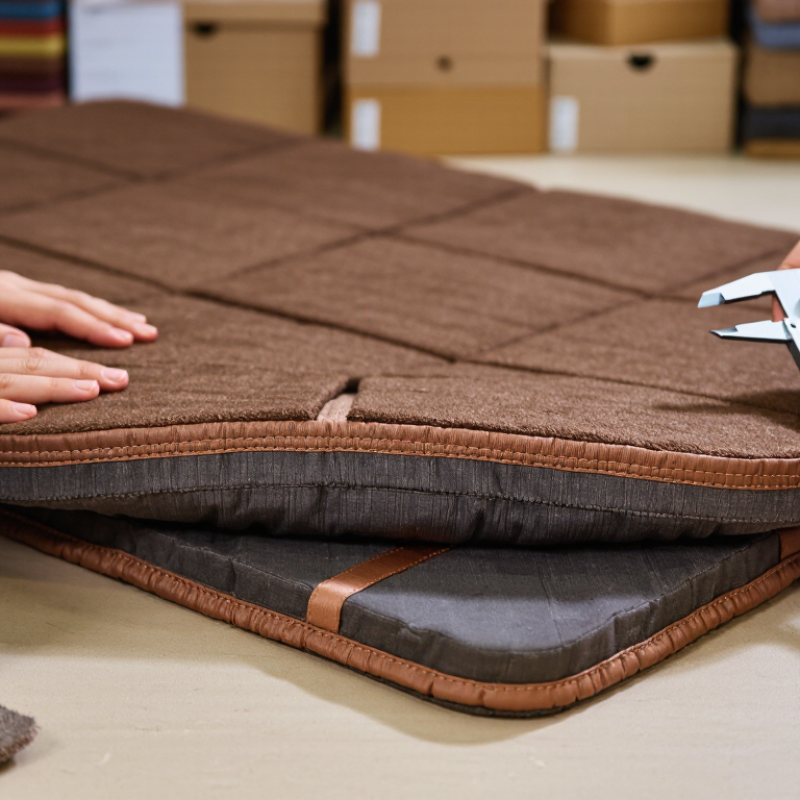
How to Choose a Thick Prayer Mat for Wholesale?
Define Wholesale Needs and Target Customer Preferences
Start by defining the buyer and sales channel: local retailers, online sellers, or institutional purchasers may need different sizes, packaging, and order quantities. Pew Research Center’s 2017 report estimated that Muslims numbered 1.8 billion worldwide in 2015, with further growth projected. This is a broad audience signal, not a prayer-mat sales forecast. UNCTAD reported that global e-commerce sales reached about $26.7 trillion in 2019, including business-to-business trade. The figure supports planning for online wholesale, but it does not reveal which mat features shoppers prefer. Ask buyers directly.
Translate preferences into testable product details. A thick mat may feel cushioned on tile, yet prove bulky to ship or store. Confirm finished dimensions, pile height, backing grip, edge stitching, and cleaning instructions. Ask whether customers prefer subdued geometric patterns, brighter colors, or easy-to-display packaging. One weak assumption is that “thicker” always means better; a small sample test may challenge it. Record comments and repeat orders before expanding the range.
Tips: Request samples from several suppliers. Measure thickness and packed weight, then test the mat on a hard floor. Share photos and specifications with a few target buyers. Compare their feedback before setting minimum order quantities or committing to a color mix.
Use this planning table to match product specifications and trial quantities to different customer groups. Thickness and order quantities are suggested starting points, not universal market standards.
| Target Customer | Typical Use or Need | Suggested Mat Specification | Suggested Finished Thickness | Preferences to Confirm | Wholesale Planning Check |
|---|---|---|---|---|---|
| Home users seeking extra cushioning | Regular daily prayers on hard floors, where additional knee and foot cushioning is valued. | Standard adult size, such as approximately 70 × 110 cm; cushioned foam or padded backing; stable, non-slip underside. | About 10–15 mm | Soft feel, supportive cushioning, secure grip, and a pile that is easy to keep clean. | Test a small assortment in two thickness options. Check mat dimensions, compressed packaging size, and recovery after unpacking. |
| Customers who need a portable mat | Travel, work, or keeping a mat in a bag for use away from home. | Lightweight construction with a foldable or rollable design; compact adult size; durable edge finishing. | About 8–10 mm | Low carrying weight, easy folding, quick drying, and cushioning without excessive bulk. | Compare packed dimensions and shipping weight as well as the mat's open size and thickness. |
| Older adults and users who prioritize comfort | Prayer at home where a softer surface and easy placement may be important. | Dense, resilient padding; a broad, stable base; clearly finished edges; non-slip backing suitable for the intended floor. | About 12–18 mm | Even support, limited shifting, comfortable pressure distribution, and a mat that is not difficult to roll or store. | Request sample testing on tile, wood, and other intended floor types. Evaluate grip and mat stability before setting specifications. |
| Families buying for children | Children's prayer spaces, family use, or gift purchases. | Child-appropriate dimensions; soft surface; reinforced seams; simple patterns and colors suited to the intended customer group. | About 8–12 mm | Comfort, easy cleaning, durable stitching, and a size that is practical for the child's age and available space. | Offer a limited size and color selection for the first order. Confirm care instructions and applicable product-safety requirements for the sales market. |
| Gift and seasonal shoppers | Purchases for religious occasions, family visits, and personal gifts. | Decorative top fabric, neatly finished borders, protective individual packaging, and a consistent appearance across the order. | About 8–14 mm | Attractive presentation, coordinated colors, a comfortable feel, and clear product-care information. | Check packaging dimensions, label requirements, color consistency, and production lead time before planning seasonal stock. |
| Community retailers and local resellers | Serving a broad customer base with different preferences and price points. | A balanced assortment of standard adult mats, thicker cushioned styles, and a small number of portable options. | About 8–15 mm across the assortment | Reliable sizing, consistent construction, practical colors, and options at more than one price level. | Begin with a modest trial quantity per style, track sell-through and customer feedback, then reorder the best-performing specifications. |
Before confirming a wholesale order: define the target customer, preferred sizes, thickness measurement method, materials, color range, packaging, minimum order quantity, delivery timeline, and quality checks. Ask for a physical sample because cushioning feel and non-slip performance cannot be judged from measurements alone.