- Home
- About Us
- Products
- News
- Blog
- Contact Us
Leave Your Message
Choosing a Soft Carpet Bedroom supplier involves more than comparing colors and prices. Global buyers need to assess fiber composition, pile density, backing, odor control, and manufacturing consistency. A cream sample may feel plush under hand, yet flatten quickly beside a frequently used bed. Ask suppliers for specifications, care instructions, sample confirmation, and clear production details before placing a larger order. Small checks matter.
No source material or verifiable expert quotation was provided, so this introduction does not invent a named expert or attribute a fabricated statement. A credible guide should add a sourced quotation only after confirming the speaker, wording, and context. That step supports trust, not just appearance.
China offers buyers access to a broad range of carpet manufacturers and product styles, but supplier capabilities can differ considerably. Compare sample softness with measured construction details. Check whether color and texture remain consistent across batches, and clarify packaging, lead times, quality checks, and export documentation. Request close-up images of the backing and pile, not only polished room photography. Ask how the supplier handles defects or specification changes. The answers reveal useful details.
A Soft Carpet Bedroom should feel comfortable beneath bare feet while remaining practical to clean and maintain. This guide outlines how global buyers can evaluate Chinese suppliers, compare product options, and ask more precise sourcing questions. No single supplier fits every project. A little skepticism helps buyers distinguish appealing samples from dependable production.
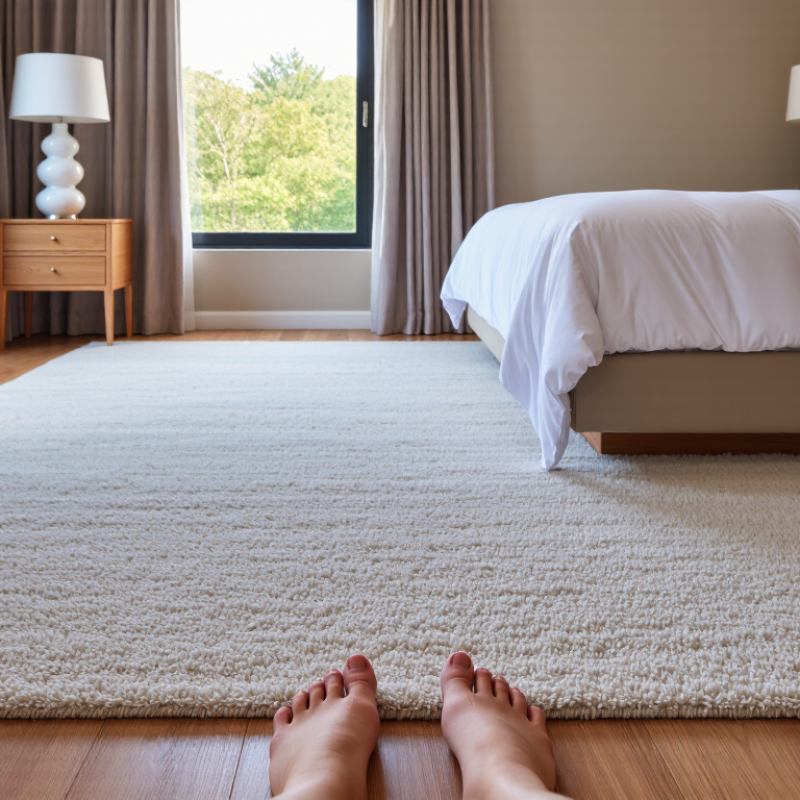
A bedroom carpet should feel comfortable at first touch, but daily use matters more than a showroom impression. Softness comes from fiber, pile height, density, and construction. A dense, low-to-medium pile often feels plush while remaining easier to vacuum than a very deep shag. Feel it barefoot. Then press the pile and see how quickly it springs back.
Material choice changes the experience. Wool can feel warm and resilient, while synthetic fibers are often practical for routine cleaning and varied budgets. Ask suppliers for fiber details, pile weight, backing information, and care instructions. These specifications help buyers compare products beyond color samples. A small sample is useful, but it cannot fully show how a carpet feels across an entire room. That matters.
Bedroom conditions deserve attention too. Check whether the backing and underlay suit the floor, and allow the room to ventilate after installation. In humid spaces, cleaning habits and airflow can affect how well the carpet stays fresh. Some buyers focus heavily on softness; I have seen that priority make sense, but it can overlook maintenance and durability. There is no perfect choice. Match the carpet to foot traffic, cleaning preferences, and the feel you want underfoot.
| Carpet Type | Common Fiber | Typical Pile Height | Bedroom Comfort and Performance | Care Considerations | What Global Buyers Should Confirm |
|---|---|---|---|---|---|
| Plush cut pile | Polyester or nylon | About 8–15 mm | Even, soft surface suited to bedrooms and other low-to-moderate traffic areas. A shorter, denser pile generally feels more stable underfoot. | Vacuum regularly. Visible footprints and vacuum marks can be more noticeable on some plush finishes. | Request fiber details, pile weight, total thickness, backing construction, and a physical sample to assess softness and appearance. |
| Shag or long-pile carpet | Polyester, polypropylene, or wool | About 20–50 mm | Deep, cushioned feel that can add warmth beside a bed. Long fibers may compress more easily in frequently walked areas. | Requires more thorough vacuuming; check whether the recommended vacuum setting is suitable for long pile. | Confirm the measured pile height, fiber shedding expectations, backing stability, and cleaning instructions. |
| Microfiber-style soft carpet | Fine-denier polyester | About 10–25 mm | Fine fibers can create a smooth, soft hand feel. Performance depends on fiber construction, pile density, and backing—not softness alone. | Follow the care label and clean spills promptly. Test cleaning products on an inconspicuous area first. | Ask for fiber composition, pile construction, colorfastness information, and a sample for touch and color assessment. |
| Wool cut pile | Wool, sometimes blended with synthetic fiber | About 8–20 mm | Wool fibers have natural resilience and provide a warm feel. Wool carpets may cost more and can respond differently to moisture than synthetic options. | Use care instructions specific to the product; prompt, gentle treatment of spills is important. | Confirm wool content, blend ratio if applicable, backing, care requirements, and any applicable product test documentation. |
| Textured loop pile | Nylon, wool, or polypropylene | About 4–10 mm | Loop construction can offer a firmer feel than plush cut pile. It may suit bedrooms where a softer surface with a more textured appearance is preferred. | Avoid snagging loops with sharp objects. Follow the manufacturer's cleaning guidance. | Check loop construction, surface texture, backing, edge finishing, and whether the intended use is residential. |
| Bedroom rug or area carpet | Polyester, polypropylene, wool, or blended fibers | Varies by construction | Can provide softness underfoot without wall-to-wall installation. A rug pad can help reduce movement on suitable floors. | Check whether the rug is washable or spot-clean only; care depends on the fiber and backing. | Confirm finished dimensions, size tolerance, edge finish, backing material, packaging, and rug-pad compatibility. |
| Buyer note: Pile-height figures are approximate examples of commonly available constructions, not fixed industry standards. Specifications vary by product and supplier. For sourcing, compare samples and confirm fiber content, pile height, total thickness, backing, tolerances, care instructions, and applicable market requirements in writing. | |||||