What Is the Best Small Kitchen Carpet to Buy?
Choosing the best Small Kitchen Carpet requires more than matching colors with cabinets. A kitchen carpet must handle splashes, crumbs, chair movement, and repeated washing. It should feel comfortable underfoot without becoming a hidden maintenance problem.
The 2024 U.S. Houzz Kitchen Trends Study shows that homeowners continue investing in practical upgrades, including improved storage, lighting, and durable surfaces. The National Kitchen & Bath Association’s 2024 Kitchen Trends Report also highlights usability, easy maintenance, and resilient materials as major kitchen priorities. These reports do not rank carpets directly. That matters. A popular design trend is not automatically the best choice for a busy cooking space.
Interior designer Emily Henderson has written, “Rugs are the easiest way to add color and pattern to a room.” Her point applies well here, but with limits. Pattern can disguise small stains. It cannot replace washable construction or a stable backing. No carpet is perfect.
A strong Small Kitchen Carpet should have a low pile, secure edges, and a surface that dries quickly. Cotton, recycled polyester, and indoor-outdoor materials can work well, depending on cleaning instructions. Test the carpet beside your sink first. Notice how it feels after one week of real cooking.
This guide compares size, material, grip, cleaning effort, and visual warmth. It also considers awkward details, such as cabinet doors catching the edge or a rug sliding during breakfast. The prettiest option may still fail your routine. That uncomfortable truth deserves attention before you buy.
Types of Small Kitchen Carpets and Their Main Features
What Is the Best Small Kitchen Carpet to Buy?
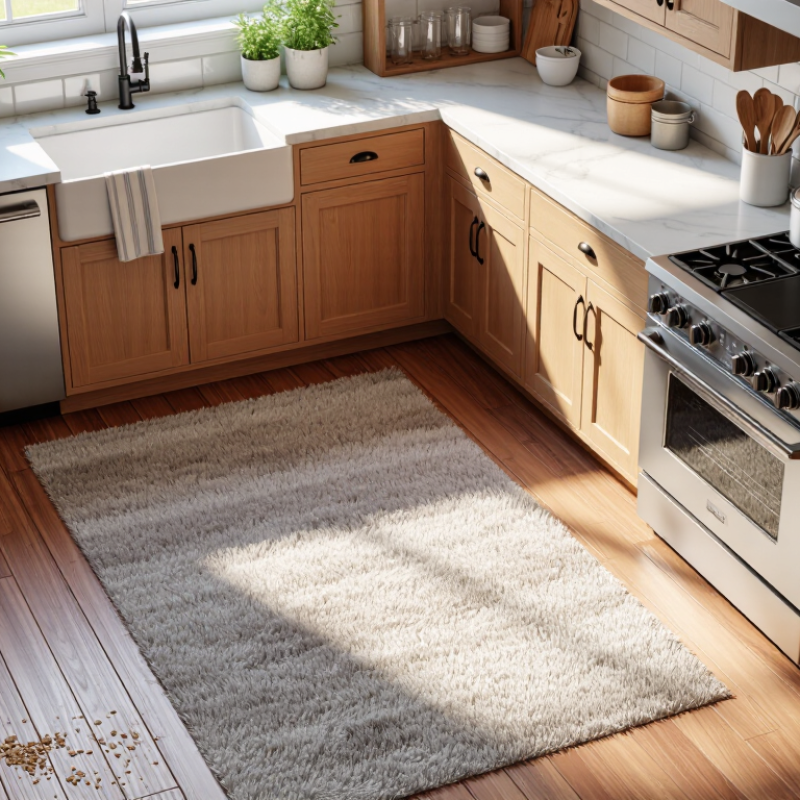
Small kitchen carpets differ in material, construction, and safety. Low-pile polyester mats resist crumbs and dry quickly, making them practical near sinks. Washable microfiber designs absorb splashes well, but they may need frequent cleaning. Natural-fiber carpets, such as cotton or jute, add warmth and texture. However, jute can hold moisture and become difficult to clean. Rubber-backed mats offer stronger grip, while thermoplastic backing usually tolerates repeated washing better. Check the care label carefully.
According to the U.S. Environmental Protection Agency, indoor pollutant levels can be two to five times higher than outdoor levels. A washable, low-odor carpet can support cleaner kitchen air, especially in compact rooms. The Consumer Product Safety Commission’s injury data also show millions of fall-related emergency visits each year. Therefore, a non-slip backing matters more than decorative appeal. Press the edges flat before use. Replace curled or cracked mats.
My practical preference is a low-pile, machine-washable carpet with a tested non-slip base. It should fit under the main standing area without touching cabinet doors. I once chose a thick, soft mat, but it trapped flour and made sweeping awkward. That mistake still matters. Look for fast drying, stable edges, and colorfast fibers. “Water-resistant” is not the same as waterproof.
What Is the Best Small Kitchen Carpet to Buy?
Small kitchen carpets are commonly selected by balancing available floor space, standing comfort, and ease of cleaning. The chart compares typical length and width ranges for four practical carpet styles.
- Rectangular mat: Compact and easy to place in front of a sink or worktop.
- Runner: Suitable for narrow galley kitchens and longer work areas.
- U-shaped mat: Designed to cover the three sides of a kitchen island or workstation.
- Anti-fatigue mat: Usually thicker and intended for comfort during extended standing.
Best Materials for Comfort, Safety, and Easy Cleaning
What Is the Best Small Kitchen Carpet to Buy?
For comfort and easy cleaning, a low-pile polypropylene carpet is a practical choice. Its fibers resist moisture, food stains, and frequent spot cleaning. A dense weave also gives stable support near the sink or cooking area. Keep it flat. Thick shag textures can trap crumbs and create awkward footing.
Safety depends on more than the surface material. Choose a carpet with a textured rubber or thermoplastic backing that grips a dry floor. Rounded edges reduce curling, but regular inspection still matters. The U.S. Consumer Product Safety Commission identifies falls as a major source of emergency-room injuries, so a loose kitchen carpet deserves quick replacement. In my experience, many “non-slip” mats slide after grease reaches the floor. Test it with your foot after cleaning.
Wool feels warm and resilient, yet it absorbs spills and may require faster professional care. Nylon offers strong wear resistance, but its stain performance depends on the fiber treatment. The U.S. Environmental Protection Agency reports that indoor pollutant concentrations can be two to five times higher than outdoor levels. Therefore, select carpets with low-emission materials and wash them according to the care label. The Carpet and Rug Institute’s Green Label Plus program evaluates carpet-related volatile organic compound emissions, providing a useful screening reference. Avoid assuming every washable carpet stays attractive. Repeated machine washing can weaken backing, and pale colors show cooking stains quickly. A small, dark-patterned, low-pile carpet may balance comfort, safety, and realistic maintenance better.
How to Match Carpet Size, Shape, and Kitchen Layout
The best small kitchen carpet fits the room’s working pattern, not just its empty floor.
Measure the walking area with cabinet doors and appliances fully open. Leave at least 3 inches of clearance around the carpet when possible. This prevents edges from catching feet or blocking drawers. A low-pile, washable carpet is usually more practical than a thick, decorative style. Look for a stable backing, especially near the sink. Water and flour create slippery surprises.
Shape should follow the kitchen layout.
In a narrow galley kitchen, a runner can connect the sink, stove, and refrigerator without crowding the passage. Choose a length that stops before doorways. For a compact L-shaped kitchen, two small rectangular carpets may work better than one oversized piece. A square carpet suits an open breakfast corner, while a small round design softens a sharp island. Keep the edges away from the stove’s immediate heat and splashing zones.
I once preferred a larger carpet because it looked more balanced in a showroom.
At home, it made the cabinet doors awkward to open. That mistake changed my measuring routine. I now place newspaper on the floor first and walk around it for a day. Check whether chairs slide smoothly and whether the carpet shifts underfoot. It may look slightly imperfect. That is acceptable if the size, shape, and placement make daily cooking safer and easier.
Care, Maintenance, and Value Considerations Before Buying
The best small kitchen carpet is not simply the softest option. It should tolerate crumbs, splashes, and repeated washing. Choose a low-pile, tightly woven carpet with a stable, non-slip backing. A 60-by-90-centimeter runner often covers the sink area without blocking cabinet doors. Measure twice. I once underestimated door clearance, and the carpet curled at the edge.
Maintenance determines real value. The Carpet and Rug Institute recommends vacuuming residential carpets two or three times weekly, with more frequent cleaning in busy areas. In a kitchen, wipe spills immediately with a damp cloth and mild detergent. Do not saturate the backing. Moisture trapped underneath can create odors and encourage microbial growth. Washable designs are convenient, but check the care label before using a machine. Some backing materials crack after repeated hot-water cycles.
The U.S. Environmental Protection Agency advises regular cleaning and ventilation to reduce indoor pollutants and tracked-in dirt. A small carpet needs less detergent and drying time than a large one, which can reduce upkeep costs. Still, the cheapest purchase may not be the best value. Compare the price with expected replacement frequency, cleaning effort, and slip resistance. The International Association of Certified Home Inspectors identifies loose rugs as a common household trip hazard, so secure the edges carefully. My practical compromise is a removable, washable carpet with a separate non-slip pad. It costs more upfront, but replacement may be less wasteful. Check the pad regularly. It can shift quietly.